
Business teams working with Hong Kong partners
Sourcing calls and partnership meetings where a Cantonese-speaking counterpart needs to be understood in English without a delay for translation.
Pick Cantonese and English, tap the mic, and start talking. The translation appears live on screen, right in your browser.
Four things that are actually true of this language pair.
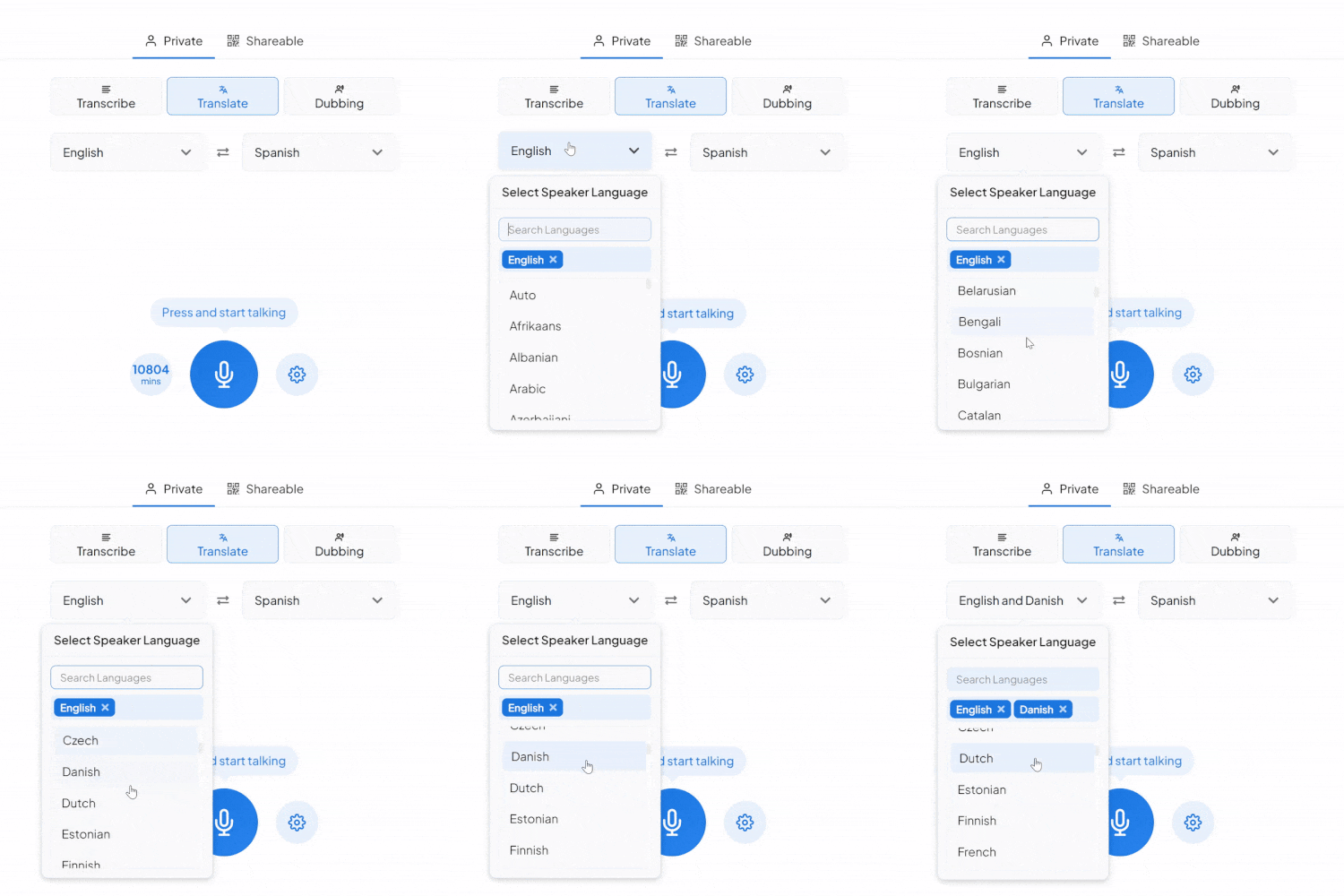
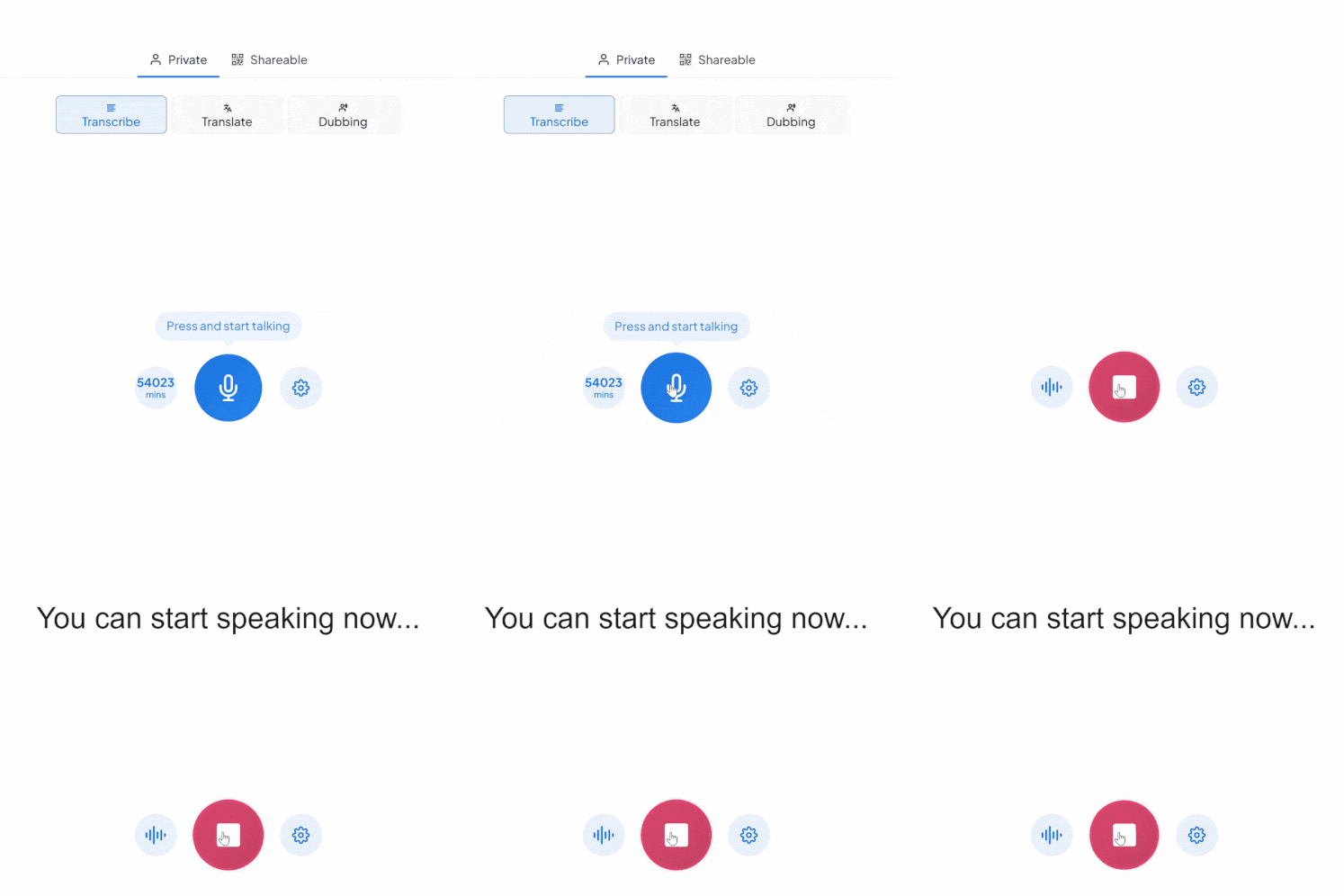
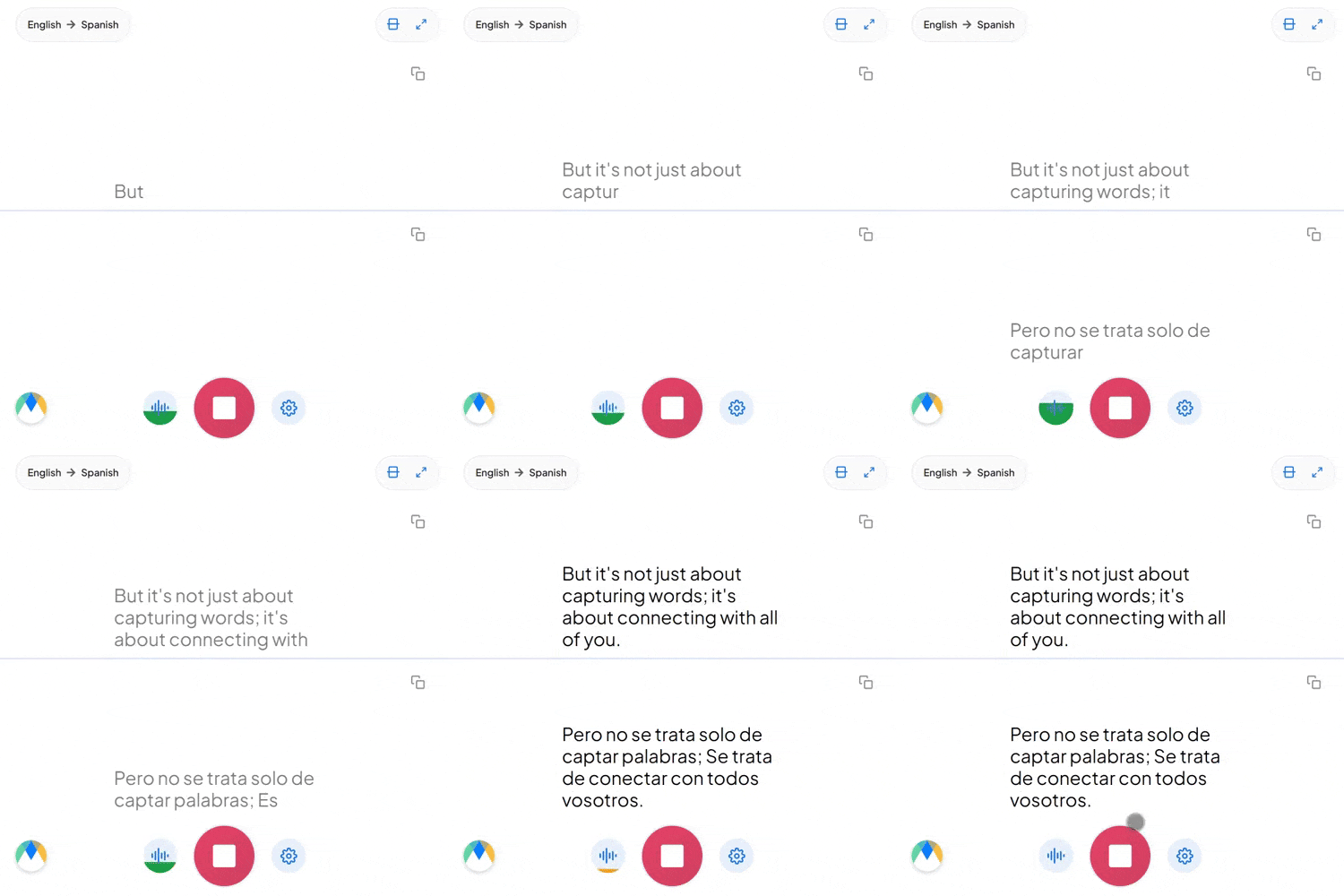
Four settings that separate a rough session from a clean one.
Set names and technical terms specific to this Cantonese-English pair in advance, so they read back the same way every session.
Send the link to your Cantonese session to anyone who needs it. They'll hear the live English translation from their own browser, no account required.
Turn on auto-detect if the conversation might drift beyond Cantonese mid-session. It recognizes what's being spoken and adjusts without you resetting anything.
Your Cantonese to English session lands in an editor afterward with every line tied to its timestamp, so a doubtful line is a quick replay, not a full re-listen.
Sourcing calls and partnership meetings where a Cantonese-speaking counterpart needs to be understood in English without a delay for translation.

Intake and consultations delivered for Cantonese-speaking patients and clients, where getting the details right matters more than speed.

Journalists conducting live interviews in Cantonese hear the English translation as their source speaks, with every line traceable back to its exact moment before a quote runs.

Already have Cantonese audio or video? Send it through Maestra's Cantonese to English dubbing for a finished English voice track instead of live captions alone.
The same tool, tuned for where Cantonese to English translation actually gets used.

Earnings calls and investor briefings where Cantonese-speaking executives need to be understood in English in real time, not after a transcript.
Learn More
Clinic intake and consultations where a Cantonese-speaking patient needs to be understood in English without waiting on an interpreter.
Learn More
Licensing and co-production discussions between English-speaking studios and Hong Kong film, TV, or talent partners, translated live as terms get negotiated.
Learn More
Cantonese and English speakers on the same call, each hearing the conversation in their own language with nobody relaying in between.
Learn MoreCantonese preserves final consonants like -p, -t, and -k that Mandarin lost over time, making it closer in some ways to how Chinese sounded centuries ago, useful context for why the two aren't just accents of each other, but genuinely different sound systems.
Particles like 㗎 (ga3) or 咩 (me1), tacked onto the end of a sentence, shift it into surprise, insistence, or doubt: nuance English usually carries through tone of voice or an added phrase, not a required grammatical particle.
"我要同client follow up吓" drops English words straight into a Cantonese sentence, and that's ordinary speech in Hong Kong business culture. Set the source to Cantonese manually, and embedded English terms come through recognizably.
Connect the meeting or streaming tool you run Cantonese sessions in, subscription required for live use.
Link your Zoom account to enable real-time Cantonese to English captions in meetings.
Bring live Cantonese to English captions into Microsoft Teams meetings.
Send a bot into your Google Meet calls for real-time Cantonese to English captions and translation.
Set up real-time Cantonese to English closed captioning in OBS Studio.
Send live Cantonese to English captions to vMix for broadcast productions.
Rather than auto-flagging anything, the editor timestamps every word and highlights it as playback reaches it, so you can line up the Cantonese audio with the translation and verify specific moments yourself.
Yes. The recognition model is trained specifically on Cantonese's tone system, not adapted from Mandarin's four-tone model.
Yes. Your Cantonese to English session opens in an editor afterward with the audio aligned to every line, ready to correct and export.
Yes. Speaker detection labels each person in the Cantonese conversation (Speaker 1, Speaker 2, and so on) as it's translated into English, so a multi-person session stays readable instead of one run-on block of text.
Yes. Cantonese to English translation is free to start, with no card or account required.
Yes. Cantonese gets its own recognition and its own voices, not a generic "Chinese" catch-all, since the two languages don't sound alike.
That's handled as ordinary bilingual speech. If Cantonese and English mix in the same sentence, no extra setup is needed. If the conversation might drift into a third language on its way to English, turn on auto-detect and it identifies each language as it's spoken instead of locking you to one source.
Sharing the Cantonese to English session link with a group is a paid-plan feature. On the free plan, translation is limited to your own live session.
That's Dubbing, a separate tab in the same tool. Choose a stock English voice for the dubbed audio, or turn on voice cloning to keep the Cantonese speaker's own voice.

Checked against standard spoken Cantonese, including real conversational audio with Hong Kong business terms mixed in, not just clean studio clips.
Clear, single-speaker Cantonese held up well across our testing, including common English loanwords once added to the dictionary.
Overlapping speakers and heavy sentence-particle-dense casual speech are the most common source of errors. Budget extra review time if your session audio has crosstalk. The free tier is what's being described here. The paid Pro engine is built to reduce exactly this kind of error in Cantonese to English sessions.