
NGO and humanitarian teams
Field briefings and coordination calls between Swahili-speaking staff and English-speaking headquarters, where instructions need to land clearly the first time.
Pick Swahili and English, tap the mic, and start talking. The translation appears live on screen, right in your browser.
Four things that are actually true of this language pair.
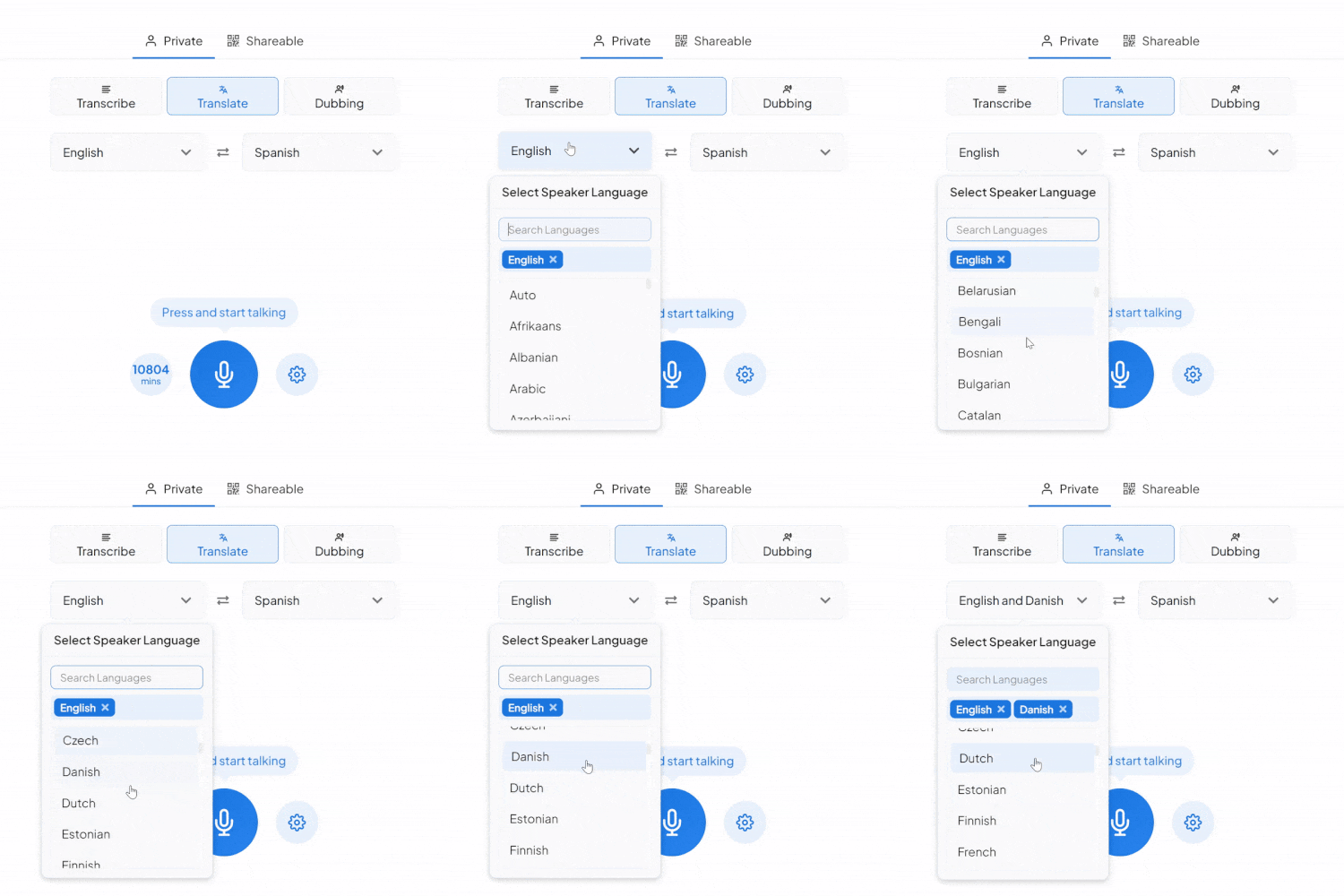
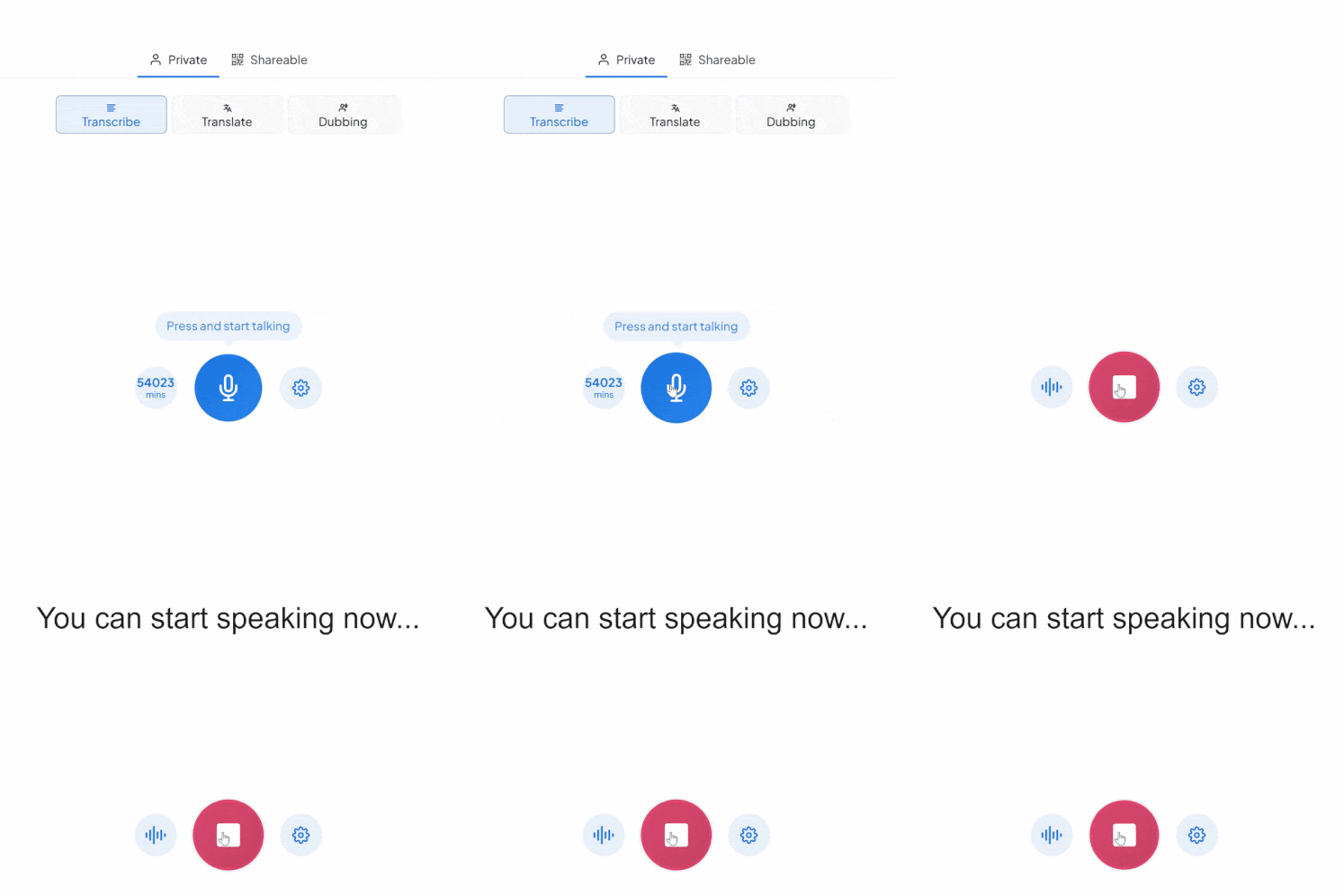
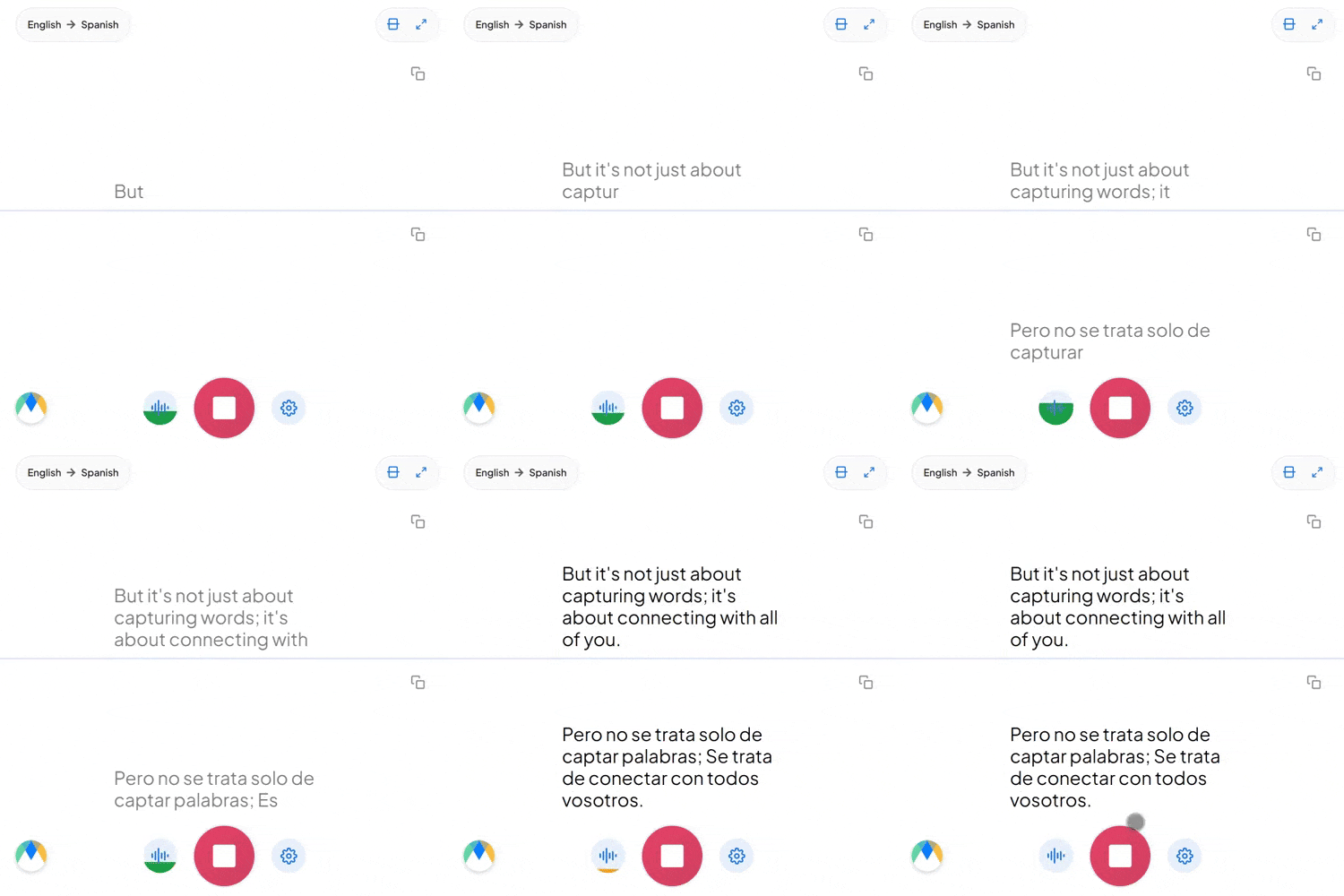
Four settings that separate a rough session from a clean one.
Lock in names and technical terms ahead of time, including English words already embedded in the Swahili speech, so they come through as-is.
A single link lets anyone open the session in their own browser and hear the English translation live, no account required.
Auto-detect recognizes more than one spoken language in the same session, useful when Swahili isn't the only language in the room before it's turned into English.
Each line in the editor stays linked to its audio timestamp, so a line you doubt is seconds of playback, not a full re-listen.
Field briefings and coordination calls between Swahili-speaking staff and English-speaking headquarters, where instructions need to land clearly the first time.

Sourcing calls and partnership meetings where a Swahili-speaking counterpart needs to be understood in English without a delay for translation.

Journalists conducting live interviews in Swahili hear the English translation as their source speaks, with every line traceable back to its exact moment before a quote runs.

Already have Swahili audio or video? Send it through Maestra's Swahili to English dubbing for a finished English voice track instead of live captions alone.
The same tool, tuned for where Swahili to English translation actually gets used.

Clinic intake and consultations where a Swahili-speaking patient needs to be understood in English without waiting on an interpreter.
Learn More
Community centers and places of worship translating Swahili announcements live for English-speaking attendees.
Learn More
Orientation sessions for Swahili-speaking students, translated live for English-speaking staff.
Learn More
Swahili and English speakers on the same call, each hearing the conversation in their own language with nobody relaying in between.
Learn MoreSwahili doesn't have masculine or feminine nouns: instead it sorts every noun into one of around fifteen classes, each with its own prefix that ripples through the verbs and adjectives around it. Mtu (person) and kitu (thing) trigger completely different agreement patterns, a system English has nothing like.
Centuries of trade along the Swahili coast left the language with two vocabulary layers, everyday Bantu-origin words alongside more formal terms borrowed from Arabic, like kitabu (book) from kitab. Picking the right layer matters for how formal a translation reads.
"Nataka ni-follow up na mteja" drops an English verb into a Swahili sentence, and that's ordinary speech in East African business and professional settings. Set the source to Swahili manually, and embedded English terms come through recognizably.
Connect the meeting or streaming tool you run Swahili sessions in, subscription required for live use.
Link your Zoom account to enable real-time Swahili to English captions in meetings.
Bring live Swahili to English captions into Microsoft Teams meetings.
Send a bot into your Google Meet calls for real-time Swahili to English captions and translation.
Set up real-time Swahili to English closed captioning in OBS Studio.
Send live Swahili to English captions to vMix for broadcast productions.
Rather than auto-flagging anything, the editor timestamps every word and highlights it as playback reaches it, so you can line up the Swahili audio with the translation and verify specific moments yourself.
Yes. Swahili marks tense with a prefix on the verb root, and the translation reads ninasoma, nilisoma, and nitasoma as present, past, and future correctly.
Yes. Your Swahili to English session opens in an editor afterward with the audio aligned to every line, ready to correct and export.
Yes, speaker detection keeps each person's Swahili lines separate and labeled as they're translated into English, rather than merging everyone into one stream.
Yes. Swahili to English translation is free to start, with no card or account required.
Yes, for standard spoken Swahili as used across East Africa. If your speaker leans on strong regional vocabulary, add those terms to the custom dictionary.
No special setup is needed for ordinary Swahili-English mixing. When a conversation isn't going to stay in Swahili the whole way through to English, auto-detect handles the switch instead of you resetting the source language mid-session.
Sharing a Swahili to English session with more than the two people on the call is a paid-plan feature, not something the free tier includes.
Not in live Translate mode, that's captions only. Dubbing, the tab next to it, adds spoken English audio, either from a stock voice or a clone of the original Swahili speaker's voice.

Checked against standard spoken Swahili, including real conversational audio with English loanwords mixed in, not just clean studio clips.
Clear, single-speaker Swahili held up well across our testing, including common English business terms once added to the dictionary.
Overlapping speakers and heavy regional accent variation are the most common source of errors. Budget extra review time if your session audio has crosstalk. A paid plan unlocks the Pro engine, which is tuned to catch far more of this in Swahili to English audio than the free version does.