
Immigration, legal, and community services
Intake and proceedings delivered in English where the Urdu-speaking client needs to follow along live, not receive a summary afterward.
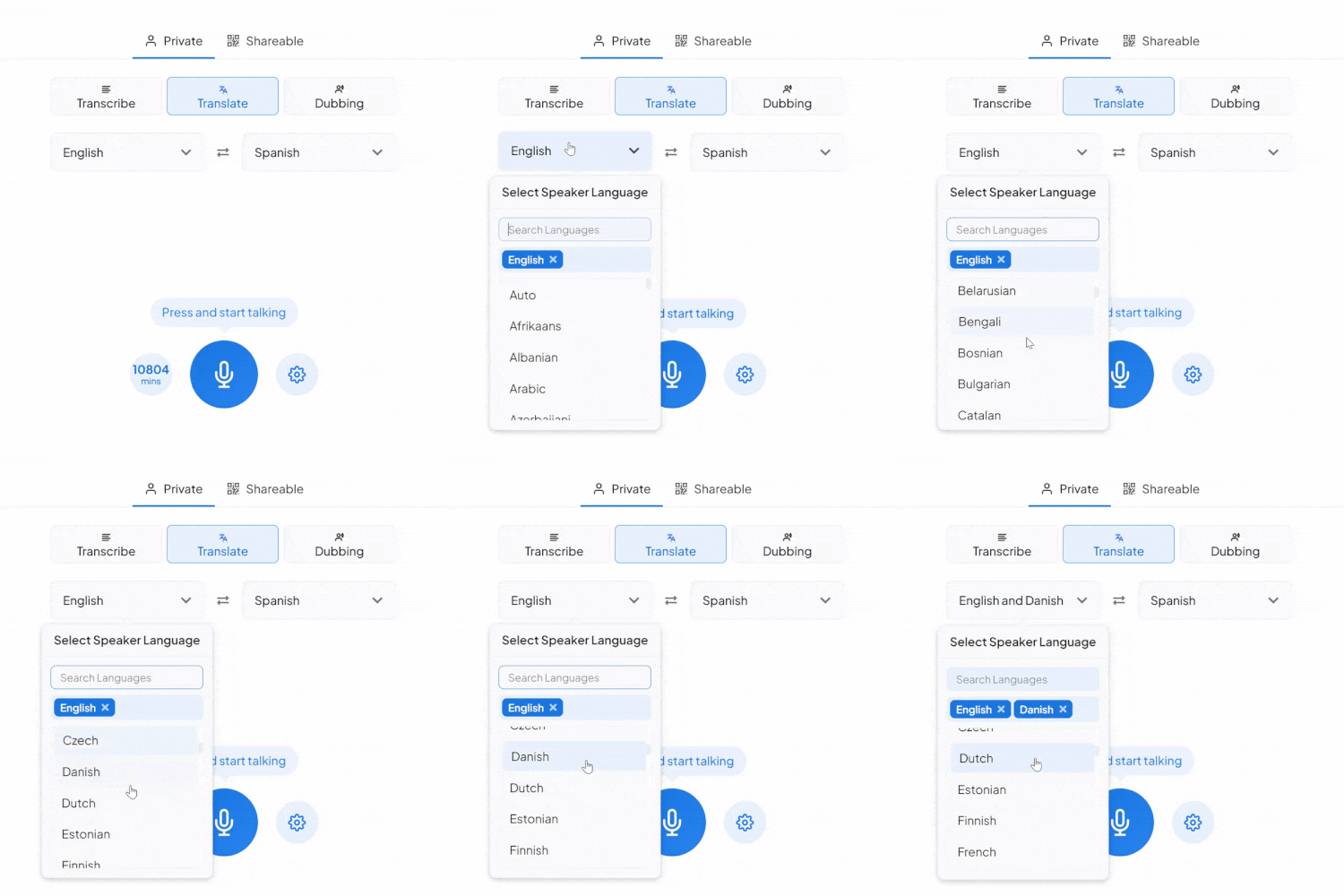
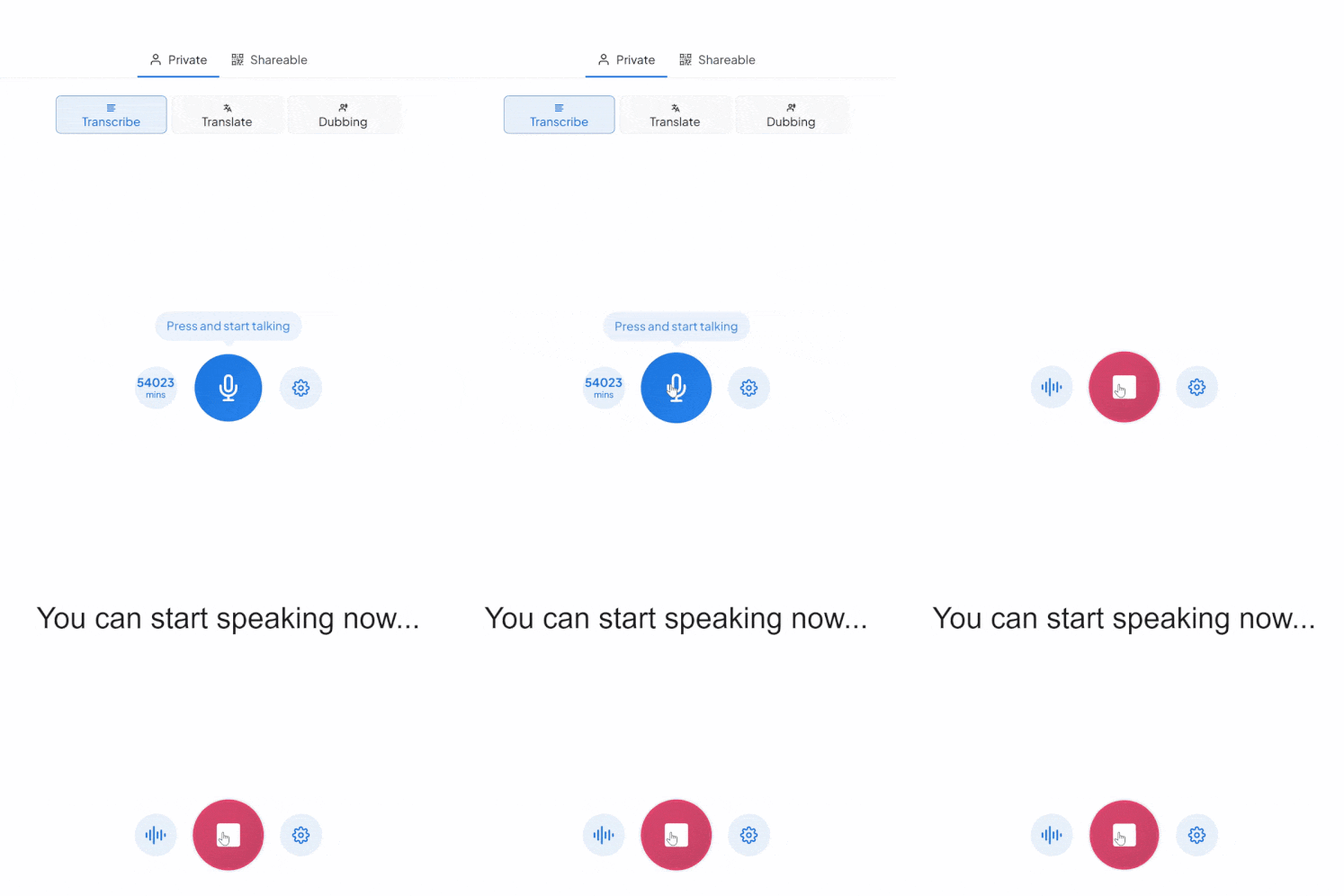
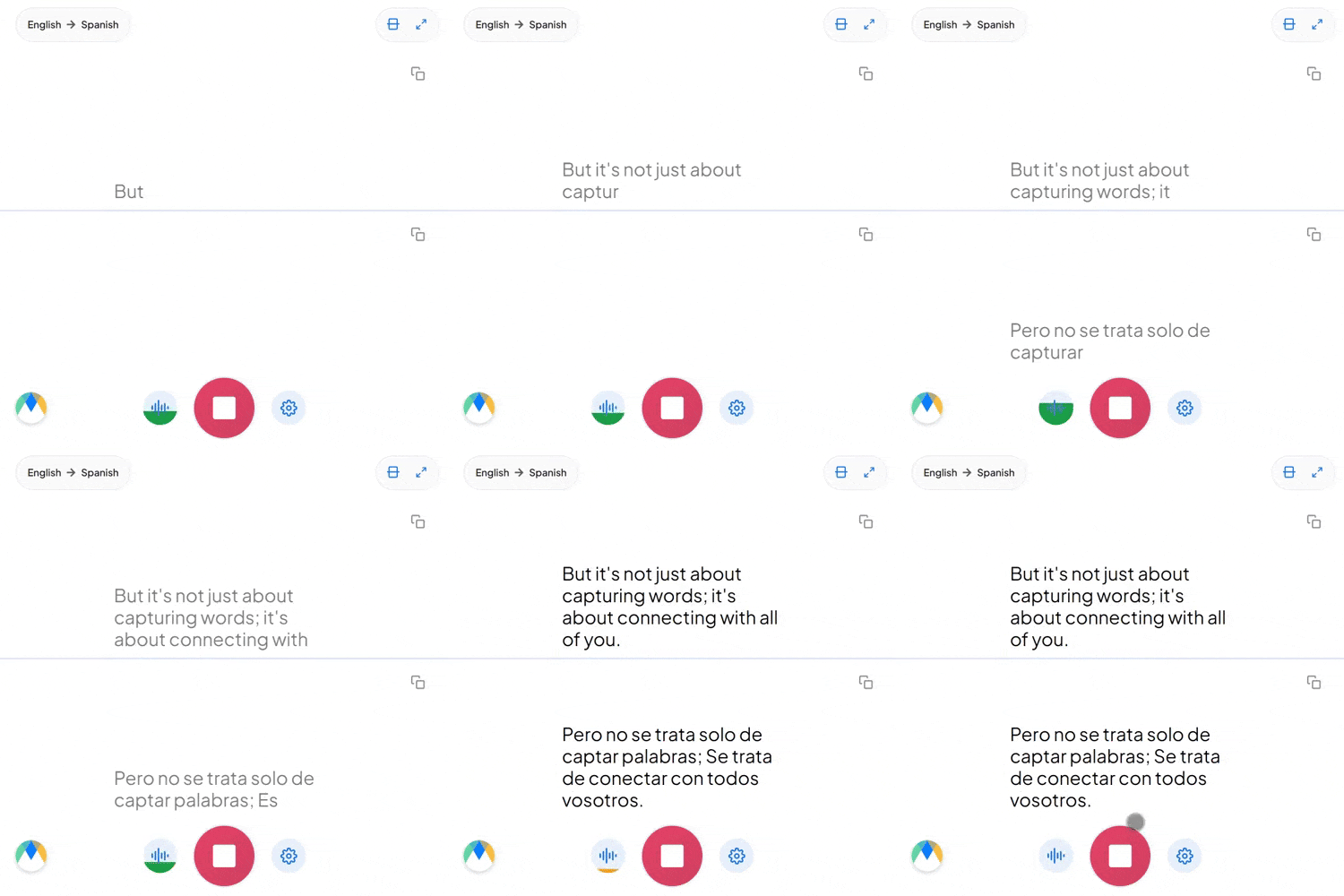
Pick English and Urdu, tap the mic, and start talking. The translation appears live on screen, right in your browser.
Four things that are actually true of this language pair.
Four settings that separate a rough session from a clean one.
Lock in names, product terms, and internal jargon in advance, including which register, everyday or formal, a term should carry, so it doesn't shift between sessions.
A single link lets colleagues drop into your live session from their own browser and hear the Urdu translation as it happens, no login required.
If more than English alone might come up on the way to Urdu, auto-detect recognizes each language as it's spoken instead of locking you to one source.
Every line in the transcript stays tied to the moment it was spoken, so a doubtful sentence is one click of playback away.
Intake and proceedings delivered in English where the Urdu-speaking client needs to follow along live, not receive a summary afterward.

Sourcing calls, vendor negotiations, and partnership meetings delivered in English, heard live in Urdu by the person deciding whether to move forward.

Consultations and intake conducted in English for Urdu-speaking patients, where a precise instruction matters more than a fast one.

Parent-teacher meetings and community notices given in English, heard live in Urdu by families who are more comfortable that way.
The same tool, tuned for where English to Urdu translation actually gets used.

Immigration and legal-aid intake delivered in English that Urdu-speaking clients need to understand before signing anything.
Learn More
Sourcing calls and partnership meetings delivered in English for Pakistan-based business partners.
Learn More
Mosque and community-center announcements delivered in English for Urdu-speaking attendees at the same event.
Learn More
English and Urdu speakers on the same call, each hearing the conversation in their own language as it happens.
Learn MoreEnglish offers one word for everyone. Urdu, like closely related Hindi, forces a choice: تُو (tu) for someone intimate, تم (tum) for someone familiar, آپ (aap) for someone you're addressing with real respect. A flat translation can't make that call for you.
Urdu is written right to left in the Nastaliq script, borrowed from Persian. It's not a font choice; it changes how a transcript needs to lay out, and getting it wrong is immediately obvious to a native reader.
"Mujhay ye report finalize karni hai" builds an Urdu sentence around an English verb, and that's how business Urdu is actually spoken, not an error to smooth over. Expect embedded English terms to survive the translation intact rather than getting converted.
Connect the meeting or streaming tool you run Urdu sessions in, subscription required for live use.
Link your Zoom account to enable real-time English to Urdu captions in meetings.
Bring live English to Urdu captions into Microsoft Teams meetings.
Send a bot into your Google Meet calls for real-time English to Urdu captions and translation.
Set up real-time English to Urdu closed captioning in OBS Studio.
Send live English to Urdu captions to vMix for broadcast productions.
There's no built-in confidence flagging. Instead, every word in the session is timestamped and highlights in sync as the audio plays, so you can review the Urdu recording against the translation at your own pace.
It defaults to the respectful aap; if a familiar tu or tum fits the relationship better, add that to your custom dictionary.
Yes. Your English to Urdu session opens in an editor afterward with the audio aligned to every segment, ready for review and correction.
Yes, speaker detection tags each speaker separately in the Urdu output, so when more than one person is talking English, the session doesn't blur into a single unattributed line.
Yes. English to Urdu translation is free to start, with no card or account required.
Yes. Output uses the native right-to-left script, not a Latin transliteration.
Ordinary bilingual English-English speech doesn't need anything special. For a conversation that could switch between more than English before it reaches Urdu, auto-detect recognizes each language as it comes up rather than requiring a manual reset.
Group sharing for English to Urdu sessions needs a paid plan. The free plan covers live translation for your own session, not a shared link for others to join.
Yes, switch to the Dubbing tab. Pick from Maestra's built-in Urdu voices, or use voice cloning so the dubbed track still sounds like the original English speaker.

Checked against standard spoken and business English translated into Urdu, including real conversational audio with technical vocabulary.
Clear, single-speaker English translated cleanly into Urdu across our testing, holding a consistent respectful register through a full session.
Fast, idiom-heavy English and overlapping speakers cause the most errors. Budget extra review time if your source audio has crosstalk or heavy slang. On a paid plan, the Pro engine handles this specific challenge in English to Urdu translation dramatically better than what's described above.