
Healthcare and caregiving teams
US hospitals, clinics, and care facilities briefing Filipino nursing and caregiving staff, where a precise instruction matters more than a quick one.
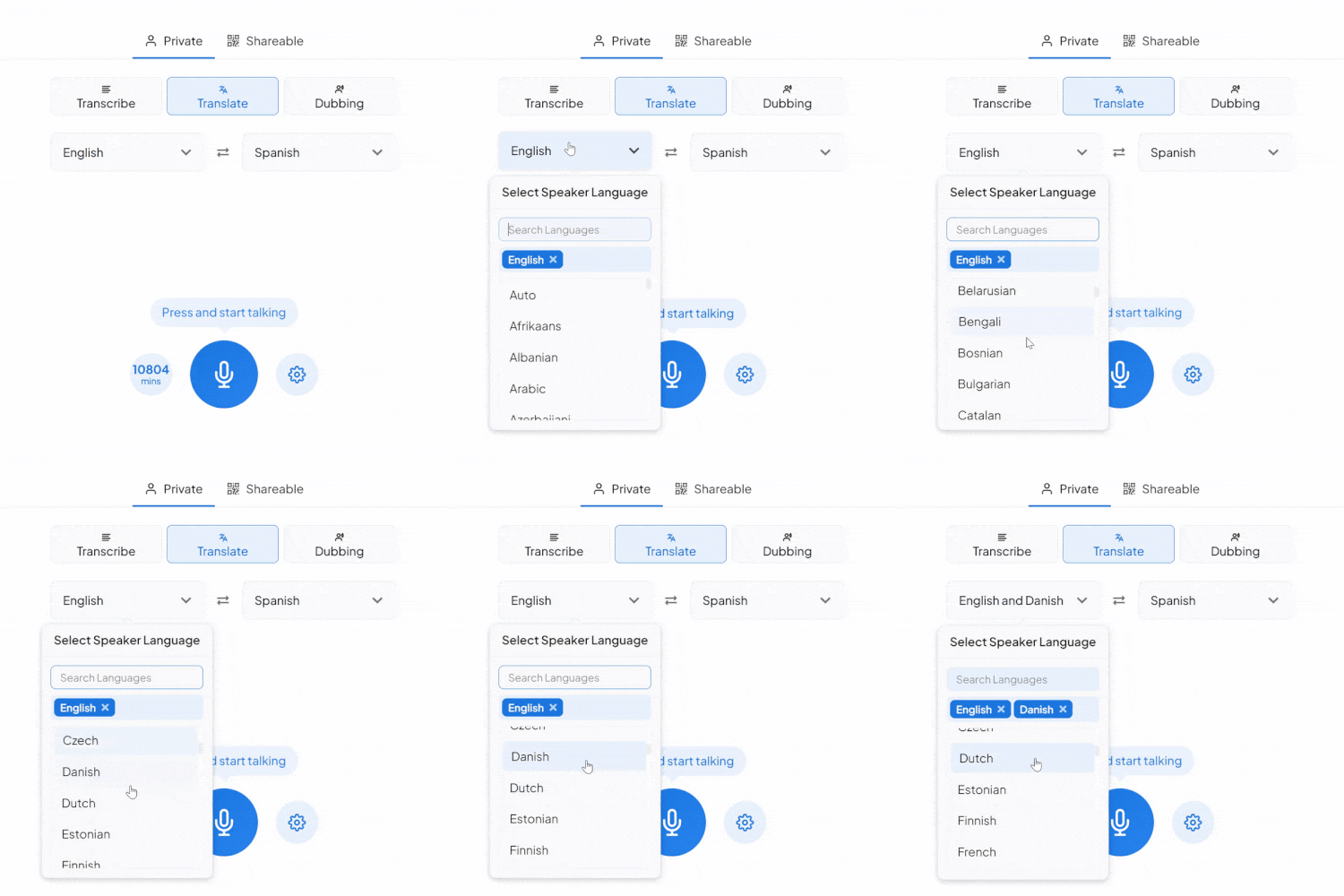
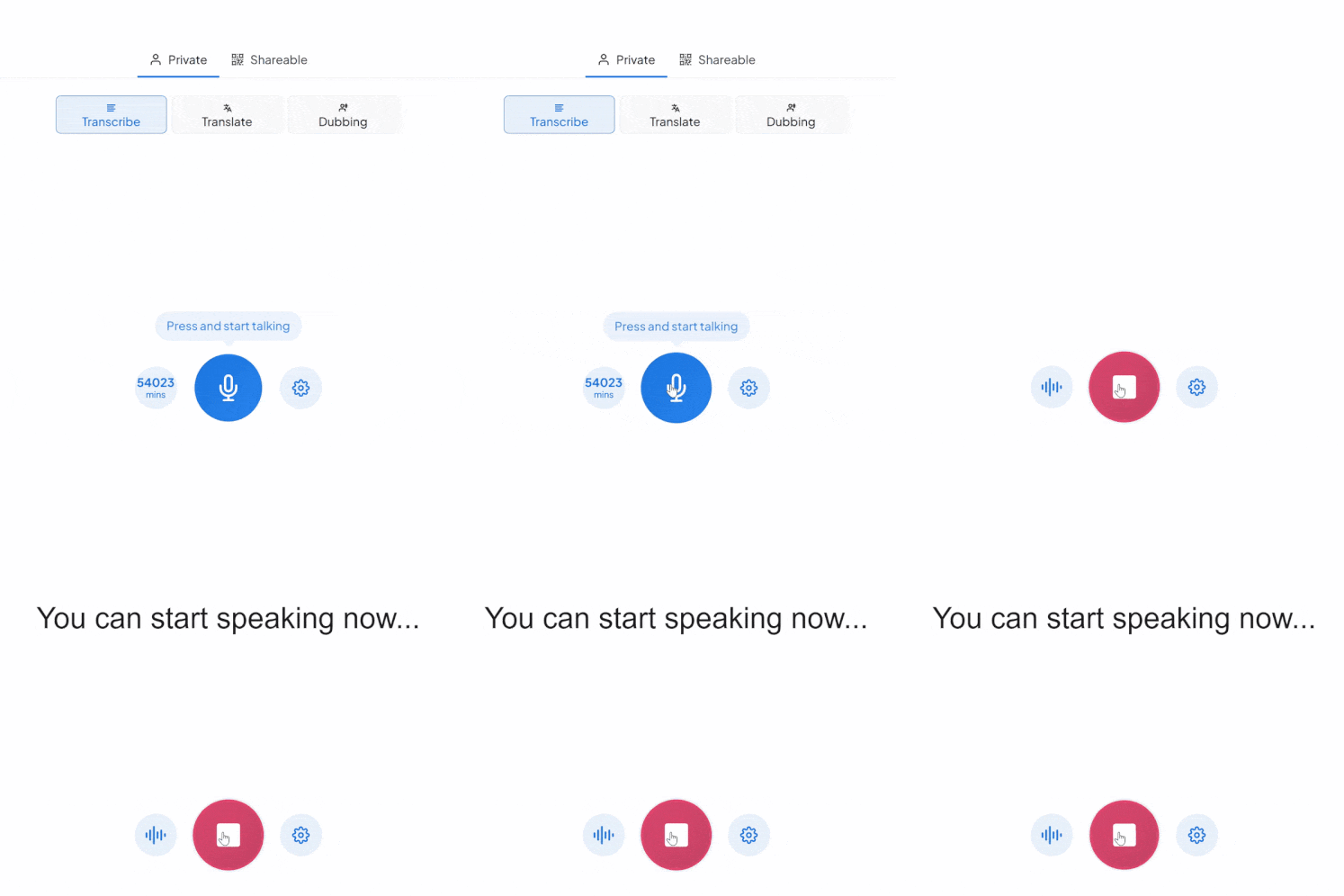
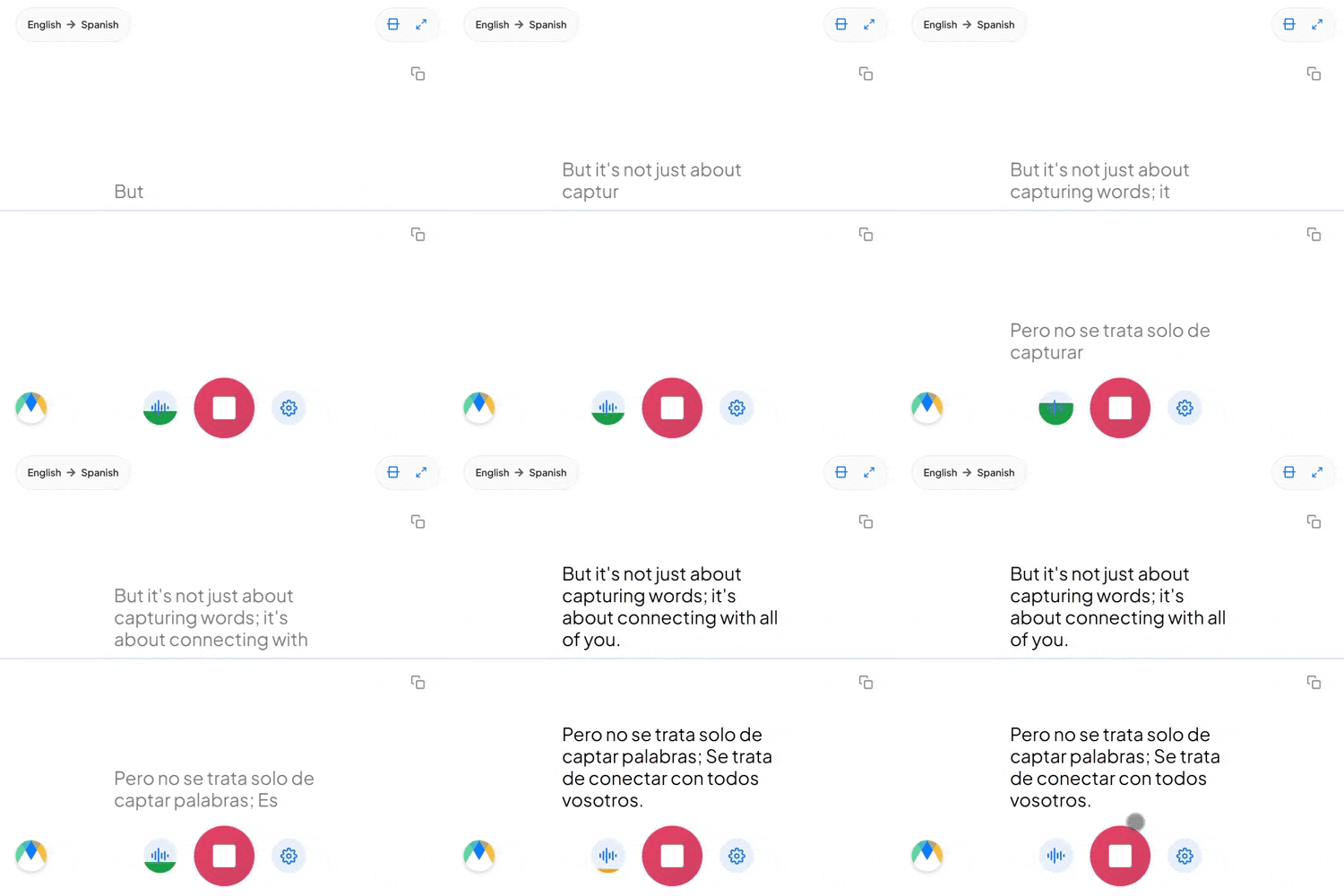
Pick English and Tagalog, tap the mic, and start talking. The translation appears live on screen, right in your browser.
Four things that are actually true of this language pair.
Four settings that separate a rough session from a clean one.
Add names, product terms, and internal jargon before you start. Filipino speech regularly keeps English business terms as-is, the dictionary makes sure yours stay untranslated on purpose, not by accident.
Send the session link to anyone who needs to follow along. They hear the live Tagalog translation in their browser, no sign-in needed.
When a conversation won't stay in English the whole time, auto-detect picks up on the switch instead of requiring a manual reset before it reaches Tagalog.
Each segment stays linked to its audio timestamp, if a line looks off, play just that moment instead of listening through the entire session again.
US hospitals, clinics, and care facilities briefing Filipino nursing and caregiving staff, where a precise instruction matters more than a quick one.

English-speaking managers training or briefing Philippines-based support teams live, without waiting on a bilingual supervisor to relay it.

Schools, clinics, and local agencies communicating with Filipino families in English-speaking countries, where the parent or client is more comfortable in Tagalog.

Household, hospitality, and shipping teams where instructions given once in English need to land clearly in Tagalog the first time.
The same tool, tuned for where English to Tagalog translation actually gets used.

Clinic intake and consultations delivered in English for Tagalog-speaking patients, where getting the details right matters more than speed.
Learn More
Sourcing calls and partnership meetings delivered in English for Filipino business partners.
Learn More
Press calls and licensing discussions between English-speaking teams and Philippine media, production, or talent partners.
Learn More
English and Tagalog speakers on the same call, each hearing the conversation in their own language as it happens.
Learn MoreTagalog marks respect with the particle po (or opo for "yes"), added into a sentence regardless of which pronoun you use. "Kumain ka na?" and "Kumain ka na po?" both translate as "Have you eaten?": but only one is respectful. A flat translator either drops po and sounds curt, or adds it everywhere and sounds stiff.
Tagalog pronouns don't mark gender at all, siya means both "he" and "she," with no ambiguity to a Tagalog speaker because context carries it. Translating out of Tagalog means guessing which one English needs; translating into Tagalog means that distinction simply disappears.
"Kailangan ko i-follow up yung client" conjugates an English verb with a Tagalog prefix mid-sentence, and that's completely ordinary spoken Tagalog, not a mistake to correct. Set the source to Tagalog manually rather than using auto-detect, and embedded English terms stay recognizable instead of getting mistranslated a second time.
Connect the meeting or streaming tool you run Tagalog sessions in, subscription required for live use.
Link your Zoom account to enable real-time English to Tagalog captions in meetings.
Bring live English to Tagalog captions into Microsoft Teams meetings.
Send a bot into your Google Meet calls for real-time English to Tagalog captions and translation.
Set up real-time English to Tagalog closed captioning in OBS Studio.
Send live English to Tagalog captions to vMix for broadcast productions.
There's no automatic flagging. Every word is timestamped, and during playback it highlights in sync with the audio, so you can scrub the Tagalog recording alongside the translation to check anything you're unsure about.
Yes. Siya covers both "he" and "she," so the translation carries gender through context rather than forcing an English pronoun where Tagalog doesn't distinguish one.
Yes. Your English to Tagalog session opens in an editor afterward with the audio aligned to every line, ready to correct and export.
Yes. Each speaker in the English conversation gets labeled individually as the Tagalog translation comes through, useful for interviews or any call with more than two people.
Yes. English to Tagalog translation is free to start, with no card or account required.
By default the output stays neutral-polite; if a specific elder or formal context calls for po markers, add that to your custom dictionary.
That's treated as normal bilingual speech, not an error. If more than English might come up in the same session on the way to Tagalog, switch on auto-detect and it tells each language apart as it's spoken.
That's part of a paid plan. Free English to Tagalog translation covers your own live session; sharing the link so a group can join needs an upgrade.
This tool shows live captions. For spoken Tagalog audio, use the Dubbing tab instead, where you can pick a stock voice or clone the English speaker's own voice.

Checked against standard spoken Filipino Tagalog, including real conversational audio with Taglish code-switching, not just clean studio clips.
Clear conversational Tagalog with common English loanwords held up well in our testing, including business and technical terms once added to the dictionary.
Fast, slang-heavy Taglish with rapid code-switching lowers accuracy compared to standard spoken Tagalog. If your speaker mixes languages heavily, budget extra time to review the transcript. The paid Pro engine is built specifically to cut this kind of error down in English to Tagalog sessions, so it's worth the upgrade if your calls run into it often.