
Refugee resettlement and social services
Intake, casework, and orientation for Nepali-speaking Bhutanese refugee communities in the US, where a precise instruction matters more than a quick one.
Pick English and Nepali, tap the mic, and start talking. The translation appears live on screen, right in your browser.
Four things that are actually true of this language pair.
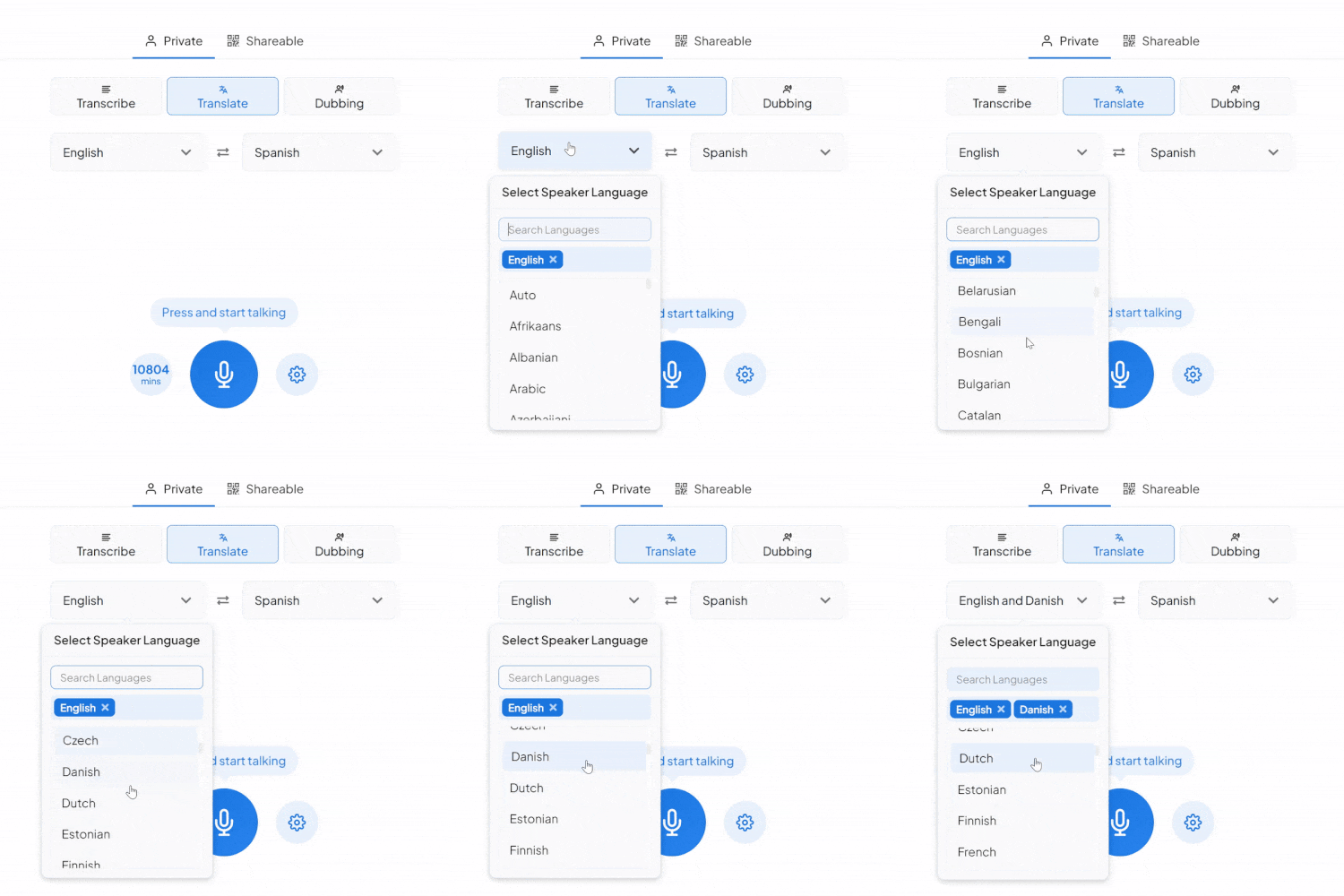
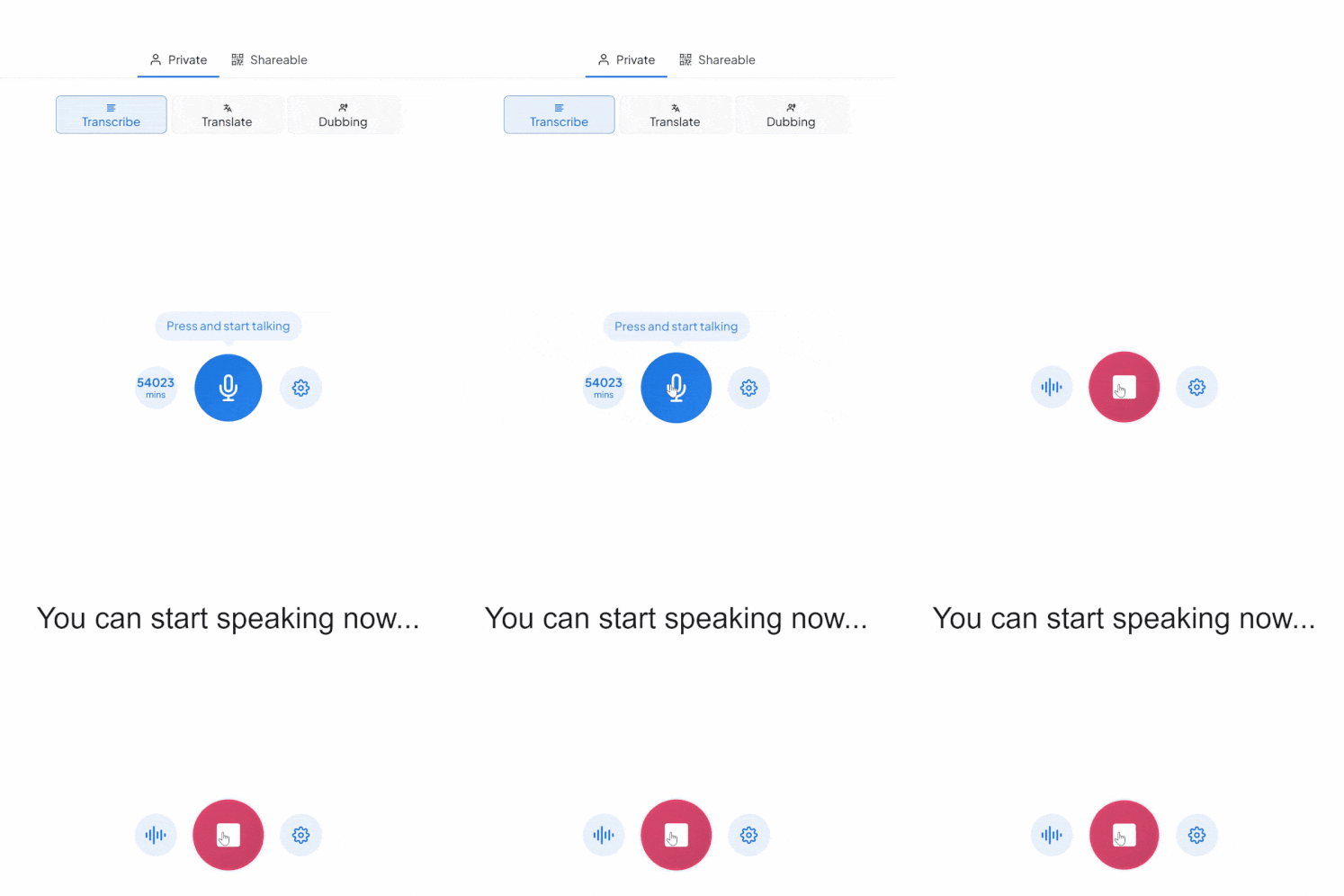
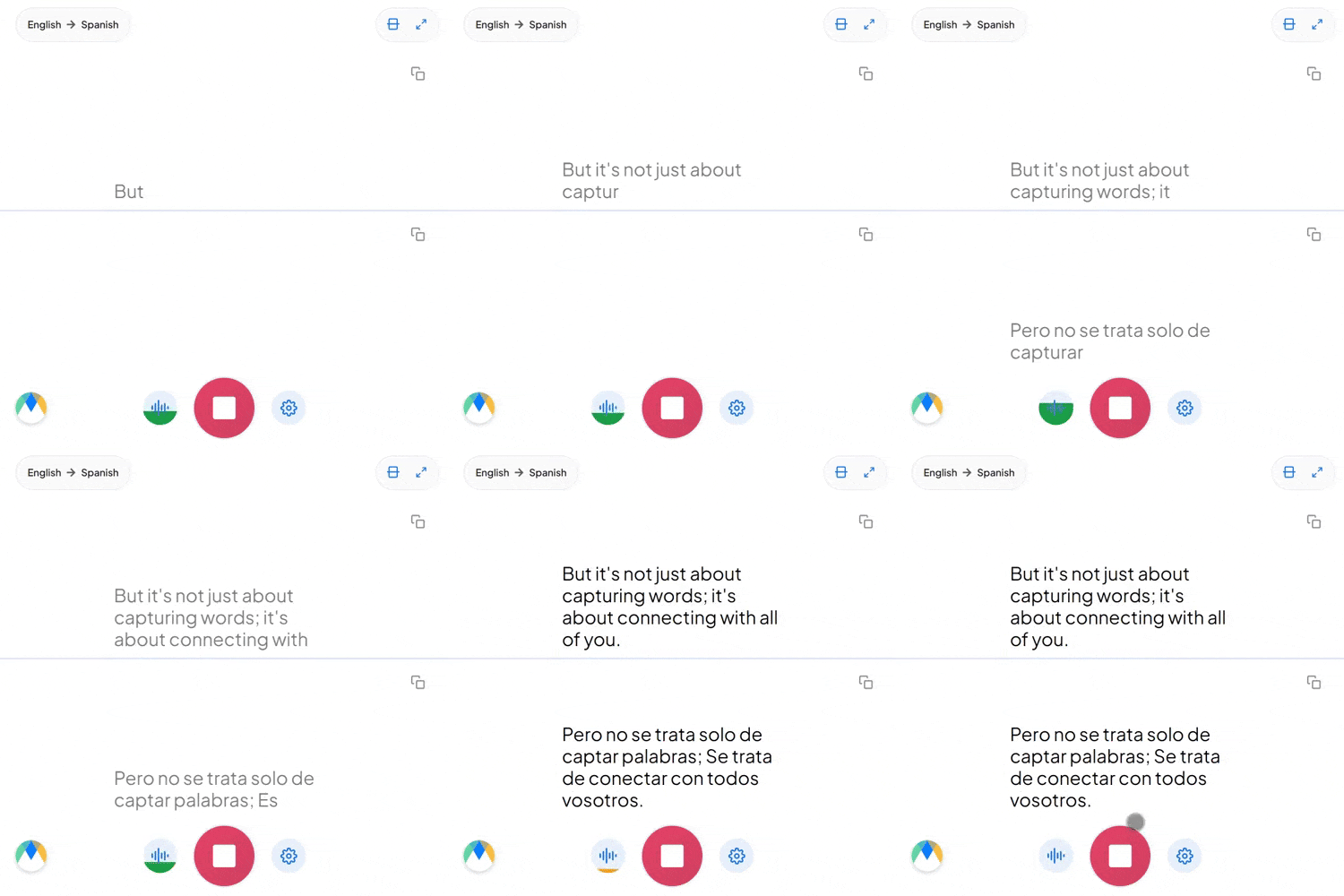
Four settings that separate a rough session from a clean one.
Add names, program terms, and organization-specific jargon before you start so they stay correct all session, instead of being guessed at differently each time.
Send the session link and anyone can join from their browser to hear the live Nepali translation, no account required.
Turn on auto-detect if the conversation might drift beyond English toward Nepali and back mid-session. It recognizes what's being spoken and adjusts without you resetting anything.
Each segment in the editor links back to its timestamp, replay the moment you're unsure about instead of re-listening to the full session.
Intake, casework, and orientation for Nepali-speaking Bhutanese refugee communities in the US, where a precise instruction matters more than a quick one.

Intake and consultations with Nepali-speaking patients, delivered in English and heard live, without waiting on a scheduled interpreter.

Field briefings and coordination calls between English-speaking staff and Nepali-speaking partners, where instructions need to land clearly the first time.

Safety briefings and logistics calls delivered in English for Nepali-speaking guides and staff, where a misheard instruction has real consequences.
The same tool, tuned for where English to Nepali translation actually gets used.

Field briefings delivered in English that Nepali-speaking staff need translated the moment instructions are given.
Learn More
Clinic intake and consultations delivered in English for Nepali-speaking patients, where getting the details right matters more than speed.
Learn More
Trekking and heritage-site guides giving briefings in English that Nepali-speaking guests need to hear live.
Learn More
English and Nepali speakers on the same call, each hearing the conversation in their own language as it happens.
Learn MoreNepali marks respect through pronoun choice, in the same family as Hindi and Urdu: ता (ta) is used for a child or subordinate, तिमी (timi) is familiar, and तपाईं (tapaai) is formal and respectful. English's one word for "you" has to be resolved into one of three, and a flat translator has no way to know which.
English says "brother" for either sibling. Nepali distinguishes दाइ (dai) for an older brother and भाइ (bhai) for a younger one: the relative age is built into the word itself, not left to context, and a term that skips it will sound incomplete to a Nepali speaker.
"Malai client sanga follow up garnu parcha" keeps an English verb inside a Nepali sentence, and that's ordinary speech in Nepali business and NGO settings. Rather than translating every embedded English term, expect it to carry over recognizably, the way it's actually spoken.
Connect the meeting or streaming tool you run Nepali sessions in, subscription required for live use.
Link your Zoom account to enable real-time English to Nepali captions in meetings.
Bring live English to Nepali captions into Microsoft Teams meetings.
Send a bot into your Google Meet calls for real-time English to Nepali captions and translation.
Set up real-time English to Nepali closed captioning in OBS Studio.
Send live English to Nepali captions to vMix for broadcast productions.
There's no automatic flagging. Every word is timestamped, and during playback it highlights in sync with the audio, so you can scrub the Nepali recording alongside the translation to check anything you're unsure about.
Yes. Location and relationship markers are attached after the noun, matching Nepali's own structure, rather than translated as English-style prepositions.
Yes. Your English to Nepali session opens in an editor afterward with the audio aligned to every line, ready to correct and export.
Yes. Speaker detection labels each person in the English conversation (Speaker 1, Speaker 2, and so on) as it's translated into Nepali, so a multi-person session stays readable instead of one run-on block of text.
Yes. English to Nepali translation is free to start, with no card or account required.
It defaults to a respectful middle register; if a specific relationship calls for a higher or lower level, add that context to your custom dictionary.
That's handled as ordinary bilingual speech. If English and English mix in the same sentence, no extra setup is needed. If the conversation might drift into a third language on its way to Nepali, turn on auto-detect and it identifies each language as it's spoken instead of locking you to one source.
Sharing the English to Nepali session link with a group is a paid-plan feature. On the free plan, translation is limited to your own live session.
That's Dubbing, a separate tab in the same tool. Choose a stock Nepali voice for the dubbed audio, or turn on voice cloning to keep the English speaker's own voice.

Checked against standard spoken English translated into Nepali, including real conversational and NGO-context audio with technical vocabulary.
Clear, single-speaker English translated cleanly into Nepali across our testing, holding a consistent respectful register throughout a session.
Fast, idiom-heavy English and overlapping speakers are the most common source of errors. If your source audio has crosstalk or heavy slang, budget extra time to review the transcript. The paid Pro engine is built specifically to cut this kind of error down in English to Nepali sessions, so it's worth the upgrade if your calls run into it often.