
Support and operations teams working with India-based staff
An English-speaking manager gives instructions or feedback, and the Hindi-speaking team hears it live, no waiting on a bilingual colleague to relay it.
Pick English and Hindi, tap the mic, and start talking. The translation appears live on screen, right in your browser.
Four things that are actually true of this language pair.
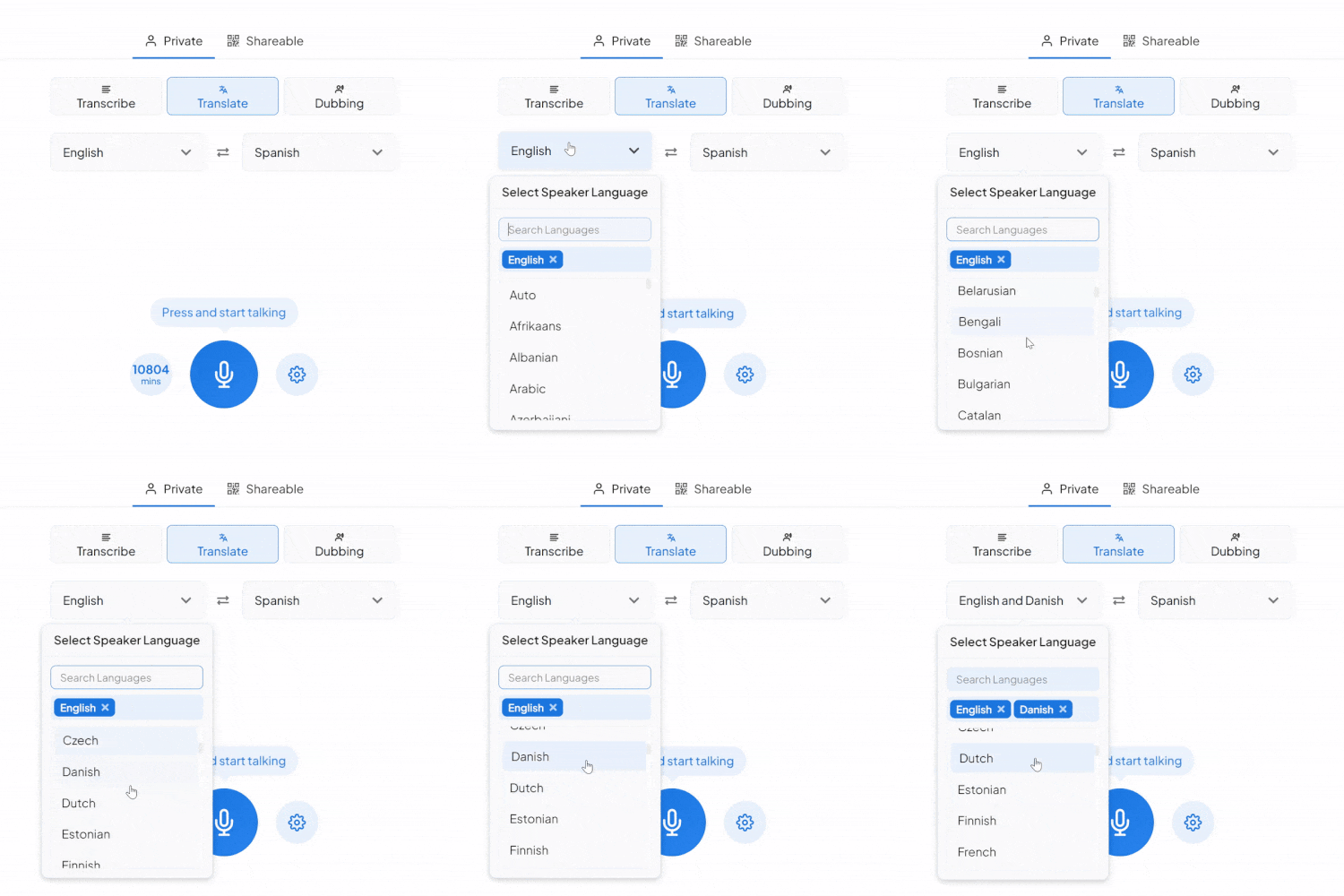
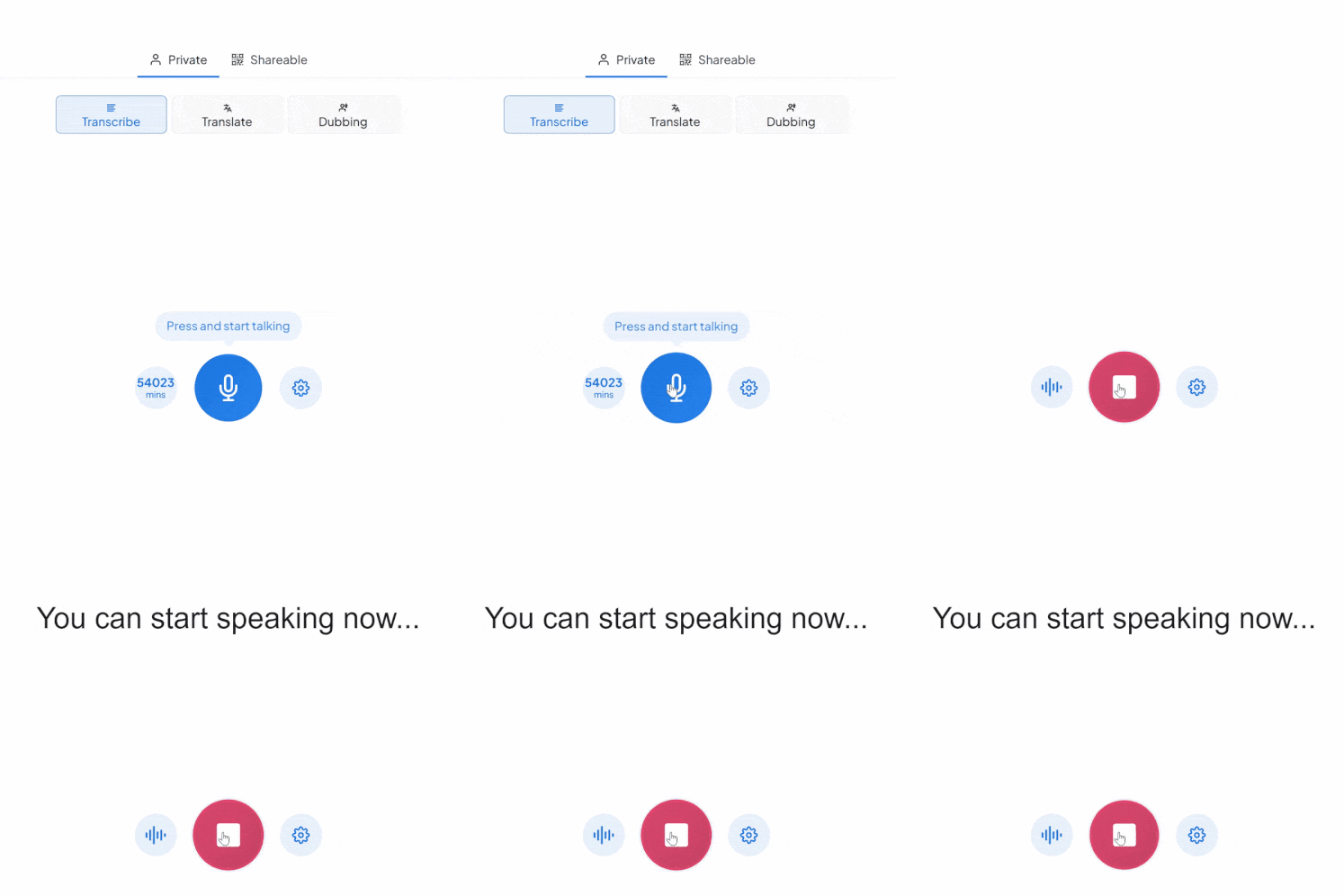
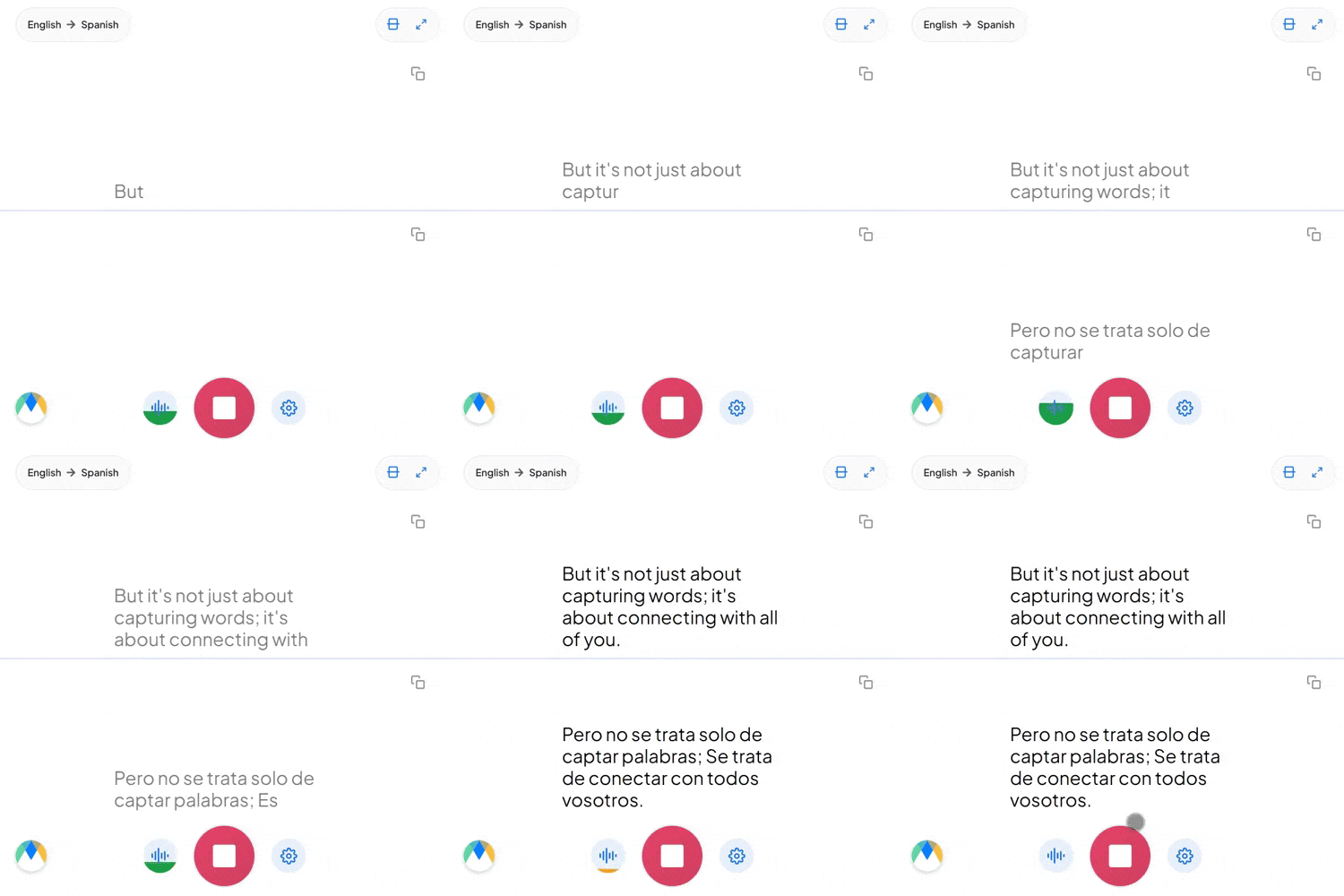
Four settings that separate a rough session from a clean one.
Add names, product terms, and internal jargon before you start. English brand names spoken mid-sentence can otherwise get transliterated into Devanagari instead of staying as-is, define them once and every session reads them back consistently.
Anyone with the link can join your live session from their browser and hear the Hindi translation as it happens, no account required on their side.
If more than English alone might come up on the way to Hindi, auto-detect recognizes each language as it's spoken instead of locking you to one source.
Every line in the transcript links back to its exact timestamp, so you can replay the few seconds you're unsure about instead of scrubbing through the whole session.
An English-speaking manager gives instructions or feedback, and the Hindi-speaking team hears it live, no waiting on a bilingual colleague to relay it.

Intake, briefings, and consultations with Hindi-speaking patients or clients, where a misheard word is a real risk, not just an inconvenience.

Product demos and sales calls delivered in English, heard live in Hindi by the people actually deciding whether to buy.

Parent meetings and community briefings where English is the default language but not everyone in the room speaks it first.
The same tool, tuned for where English to Hindi translation actually gets used.

Board meetings and investor calls delivered in English for Hindi-speaking stakeholders across India.
Learn More
Press calls and licensing discussions between English-speaking teams and Hindi-language media, production, or talent partners.
Learn More
Clinic intake and consultations delivered in English for Hindi-speaking patients, where getting the details right matters more than speed.
Learn More
English and Hindi speakers on the same call, each hearing the conversation in their own language as it happens.
Learn MoreHindi marks respect through pronoun choice. तू (tū) is intimate, तुम (tum) is familiar, and आप (āp) is formal: the choice tells you whether someone is family, a peer, or being addressed with real deference. English flattens all three into one word: you. A customer service call that switches from आप to तू has told you something, and none of it survives a flat translation.
Hindi verbs conjugate for gender, not just tense: a man says गया (gaya) for "went," a woman says गई (gayi), same meaning. Getting a name or term read back correctly in the dictionary means telling the tool which form applies, something English verbs never ask for.
"Mujhe client ko follow up karna hai" mixes English business vocabulary straight into a Hindi sentence, and that's completely ordinary spoken Hindi, not a mistake to correct. Set the source to Hindi manually rather than using auto-detect, and the embedded English stays as English instead of getting mistranslated a second time.
Connect the meeting or streaming tool you run Hindi sessions in, subscription required for live use.
Link your Zoom account to enable real-time English to Hindi captions in meetings.
Bring live English to Hindi captions into Microsoft Teams meetings.
Send a bot into your Google Meet calls for real-time English to Hindi captions and translation.
Set up real-time English to Hindi closed captioning in OBS Studio.
Send live English to Hindi captions to vMix for broadcast productions.
No moment gets flagged automatically. The editor times every word to the audio and highlights it during playback instead, so checking the Hindi recording against the translation is a matter of scrubbing to the spot you want.
Yes. Hindi verbs change form based on the subject's gender, and the translation carries that agreement through rather than defaulting to one form.
Yes. Your English to Hindi session opens in an editor afterward with the audio aligned to every line, ready to correct and export.
Yes, speaker detection tags each speaker separately in the Hindi output, so when more than one person is talking English, the session doesn't blur into a single unattributed line.
Yes. English to Hindi translation is free to start, with no card or account required.
It defaults to the respectful aap; if a specific relationship calls for tu or tum instead, add that to your custom dictionary.
Ordinary bilingual English-English speech doesn't need anything special. For a conversation that could switch between more than English before it reaches Hindi, auto-detect recognizes each language as it comes up rather than requiring a manual reset.
Group sharing for English to Hindi sessions needs a paid plan. The free plan covers live translation for your own session, not a shared link for others to join.
Yes, switch to the Dubbing tab. Pick from Maestra's built-in Hindi voices, or use voice cloning so the dubbed track still sounds like the original English speaker.

Checked against standard spoken Hindi, including real conversational audio with English loanwords mixed in, not just clean studio clips.
Hindi speech with common English business terms translated cleanly once those terms were added to the custom dictionary, holding up across normal conversational pace.
Fast, heavily regional or slang-dense Hindi lowers accuracy compared to standard spoken Hindi. If your speaker leans on strong regional vocabulary, add it to the dictionary first and budget extra time to review. A paid plan unlocks the Pro engine, which is tuned to catch far more of this in English to Hindi audio than the free version does.