
Business teams expanding into China
Product demos, sales calls, and partnership meetings delivered in English, heard live in Chinese by the people actually deciding whether to work with you.
Pick English and Chinese, tap the mic, and start talking. The translation appears live on screen, right in your browser.
Four things that are actually true of this language pair.
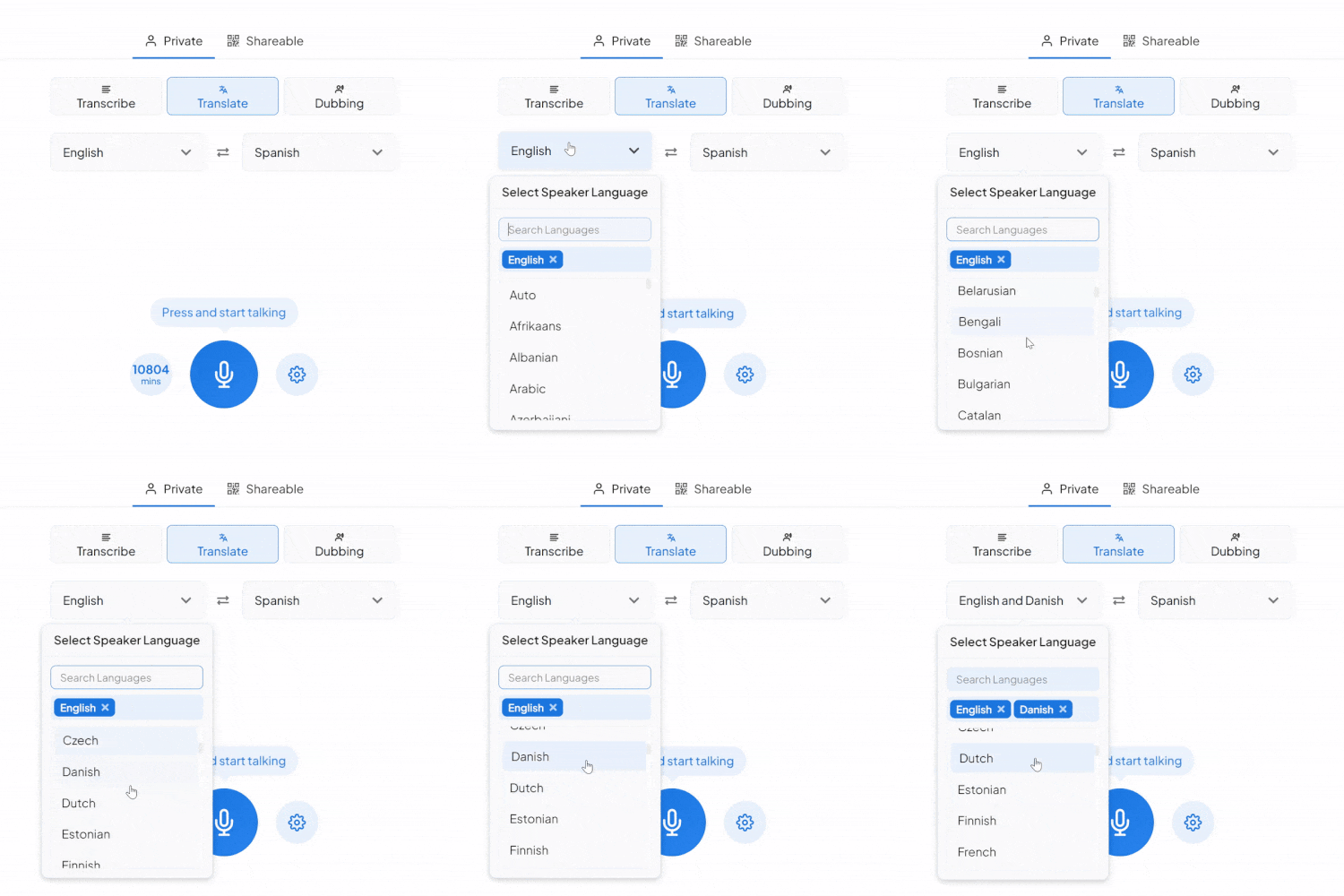
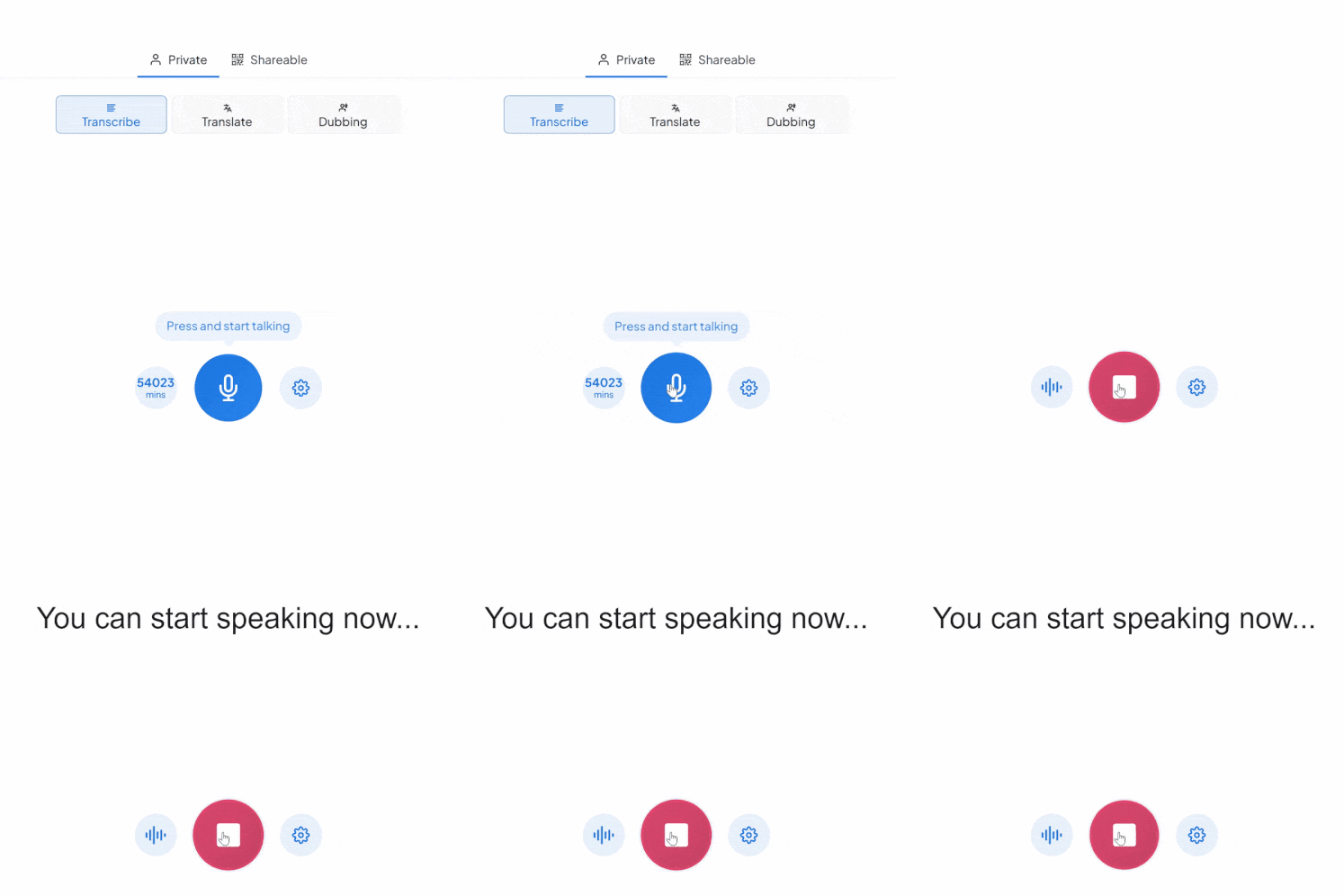
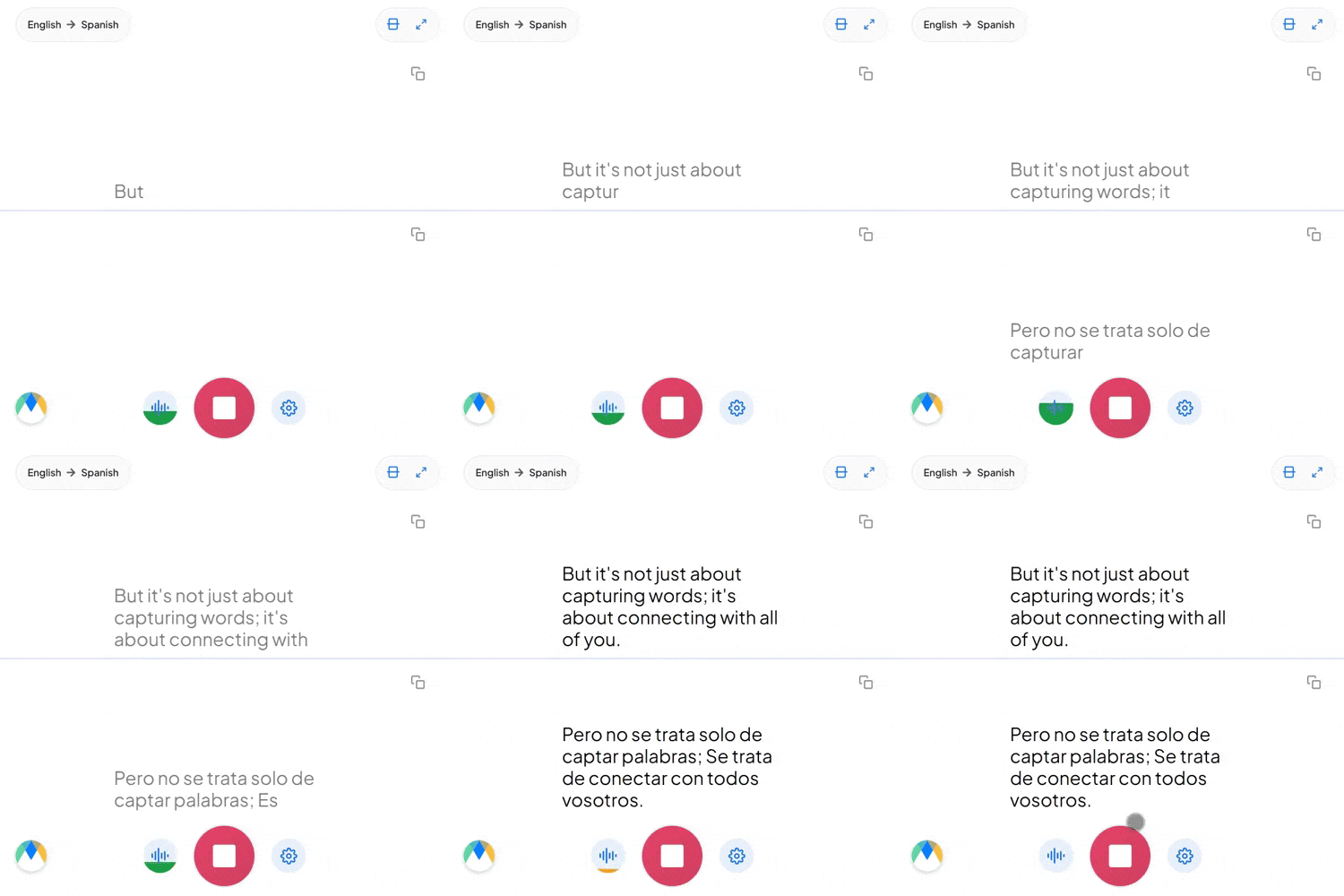
Four settings that separate a rough session from a clean one.
Add names, product terms, and internal jargon before you start: including the right classifier, like 一个 for a person or 一份 for a document, so they read back correctly every time.
Anyone with the link can join the live session from their browser and hear the Chinese translation as it happens, with no account needed.
When a conversation won't stay in English the whole time, auto-detect picks up on the switch instead of requiring a manual reset before it reaches Chinese.
Every segment links to its timestamp, so if a classifier or tone seems off, you can play that exact moment instead of the whole session.
Product demos, sales calls, and partnership meetings delivered in English, heard live in Chinese by the people actually deciding whether to work with you.

Orientation, advising, and family communications for Chinese international students and their parents, where English is the default but not everyone's first language.

English-speaking support reps handling Chinese-speaking buyers live, without routing every conversation through a bilingual specialist.

Front desk, tour, and event staff giving instructions in English that Chinese-speaking guests need to hear live, not read off a printed card.
The same tool, tuned for where English to Chinese translation actually gets used.

Earnings calls and investor briefings delivered in English that Mandarin-speaking stakeholders need to hear live, not after a transcript.
Learn More
Factory floor briefings and supplier calls delivered in English for Chinese manufacturing partners, where precision matters.
Learn More
Multi-day conferences translated into Chinese in real time, session by session, so nothing needs repeating afterward.
Learn More
English and Chinese speakers on the same call, each hearing the conversation in their own language as it happens.
Learn MoreMā (妈, mother), má (麻, hemp), mǎ (马, horse), and mà (骂, scold) are the same syllable at four different pitches. English intonation carries emotion; Chinese tone carries the actual word, a spoken translation has to commit to a tone, not just a sound.
Where English just says "a" or "one," Chinese needs a classifier that matches the noun: 一个 for a person, 一本 for a book, 一杯 for a cup of something. Getting a custom term's classifier wrong reads as a small but noticeable mistake to a native speaker.
Mainland China reads Simplified characters; Hong Kong and Taiwan read Traditional. Which one a Chinese-speaking audience expects depends on where they're from, not on which is "more correct", pick the script that matches your actual audience.
Connect the meeting or streaming tool you run Chinese sessions in, subscription required for live use.
Link your Zoom account to enable real-time English to Chinese captions in meetings.
Bring live English to Chinese captions into Microsoft Teams meetings.
Send a bot into your Google Meet calls for real-time English to Chinese captions and translation.
Set up real-time English to Chinese closed captioning in OBS Studio.
Send live English to Chinese captions to vMix for broadcast productions.
The tool doesn't flag uncertain moments automatically. What it does do is timestamp every word and highlight it during playback, so you can scrub through the Chinese audio next to the translation and check any line yourself.
Yes. Chinese requires a classifier before most counted nouns, and the translation selects the one that matches what's being counted.
Yes. Your English to Chinese session opens in an editor afterward with the audio aligned to every line, ready to correct and export.
Yes. Each speaker in the English conversation gets labeled individually as the Chinese translation comes through, useful for interviews or any call with more than two people.
Yes. English to Chinese translation is free to start, with no card or account required.
You choose: set the target region to mainland China, Hong Kong, or Taiwan and get the matching script convention.
That's treated as normal bilingual speech, not an error. If more than English might come up in the same session on the way to Chinese, switch on auto-detect and it tells each language apart as it's spoken.
That's part of a paid plan. Free English to Chinese translation covers your own live session; sharing the link so a group can join needs an upgrade.
This tool shows live captions. For spoken Chinese audio, use the Dubbing tab instead, where you can pick a stock voice or clone the English speaker's own voice.

Checked against standard spoken and business English translated into both Mandarin and Cantonese, including real conversational audio.
Clear, single-speaker English translated cleanly into Mandarin across our testing, holding accurate tone and classifier use for common business terms.
Fast, idiom-heavy English and overlapping speakers are the most common source of errors. If your source audio has crosstalk or heavy slang, budget extra time to review the transcript. This is the gap the paid Pro engine is designed to close for English to Chinese sessions specifically, worth it if your calls hit this regularly.