
Immigration, legal, and community services
Intake and proceedings with Urdu-speaking clients where an accurate English record matters, not just a general sense of what was said.
Pick Urdu and English, tap the mic, and start talking. The translation appears live on screen, right in your browser.
Four things that are actually true of this language pair.
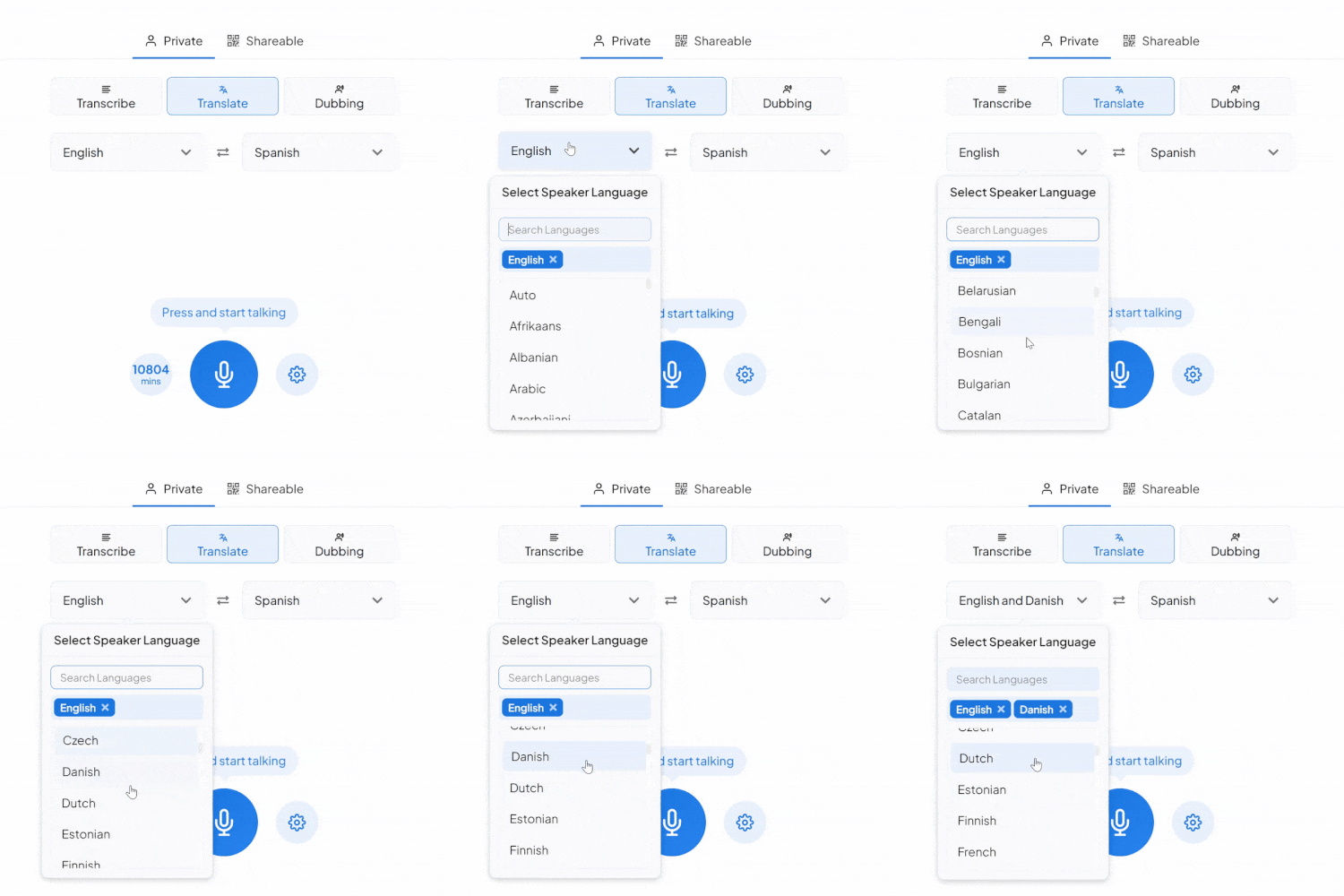
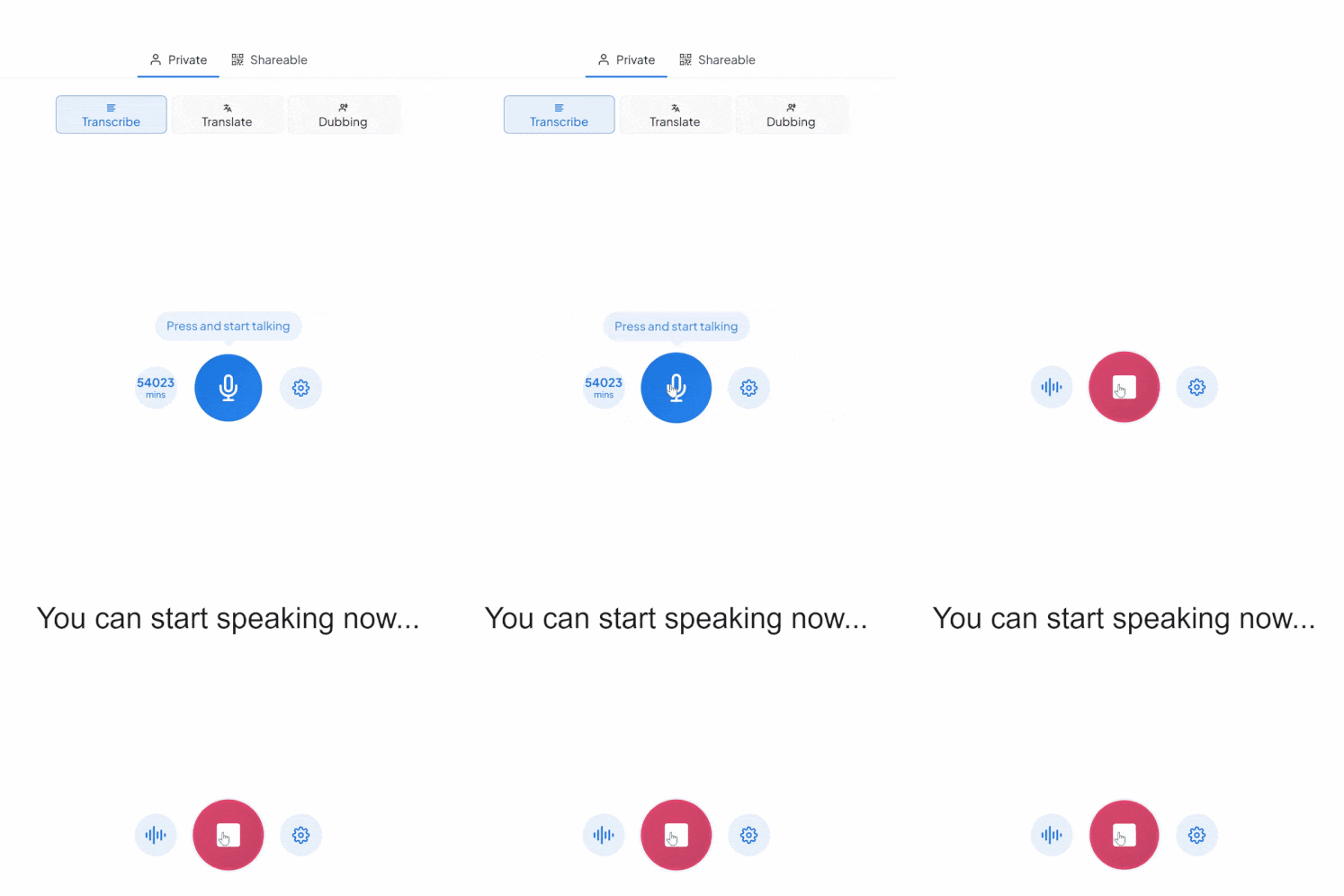
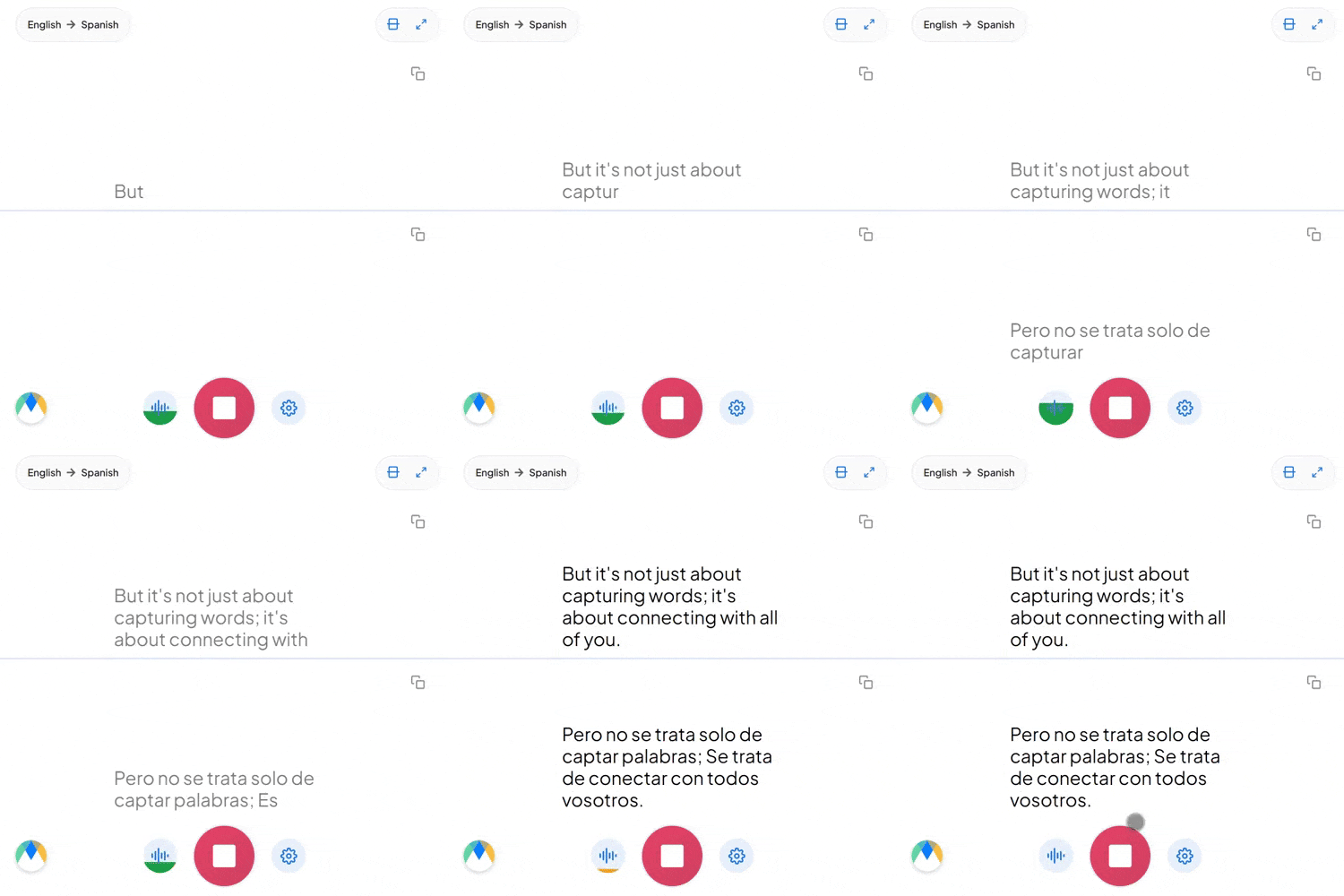
Four settings that separate a rough session from a clean one.
Add names, product terms, and internal jargon before you start and they stay correct all session, including formal Persian-origin terms your organization always renders a specific way.
One link is all it takes, anyone can join from their browser and hear the live English translation, no account required.
If more than Urdu alone might come up in the same conversation, auto-detect recognizes each language as it's spoken instead of locking you to one source.
Each transcript segment stays linked to its audio, so you can jump straight to the four seconds you doubt instead of replaying everything.
Intake and proceedings with Urdu-speaking clients where an accurate English record matters, not just a general sense of what was said.

Sourcing calls, vendor negotiations, and partnership meetings where an Urdu-speaking counterpart needs to be understood in English, live.

Journalists conducting live interviews in Urdu hear the English translation as their source speaks. Every line stays linked to its timestamp, so a quote can be checked before it runs.

Already have Urdu audio or video? Send it through Maestra's Urdu to English dubbing to get a full English voice track instead of just live captions.
The same tool, tuned for where Urdu to English translation actually gets used.

Immigration and legal-aid intake where an Urdu-speaking client's exact words need to be captured in English before a filing goes in.
Learn More
Sourcing calls and partnership meetings where a Pakistan-based business partner needs to be understood in English.
Learn More
Clinic intake and consultations where an Urdu-speaking patient needs to be understood in English without waiting on an interpreter.
Learn More
Urdu and English speakers on the same call, each hearing the conversation in their own language with nobody relaying in between.
Learn MoreUrdu marks respect through pronoun choice, just as closely related Hindi does. تُو (tu) is intimate, تم (tum) is familiar, and آپ (aap) is formal: the choice tells you whether someone is family, a peer, or being addressed with real deference. English flattens all three into one word: you.
Everyday Urdu shares much of its core vocabulary with Hindi, but formal and literary Urdu draws heavily on Persian and Arabic instead, so the same concept often has two valid words, and picking the wrong register in a written transcript reads as noticeably off to a native speaker.
"Mujhe ye report finalize karni hai" drops an English verb straight into an Urdu sentence, and that's ordinary speech in business and urban Urdu. Set the source to Urdu manually rather than using auto-detect, and embedded English stays recognizable instead of getting mistranslated a second time.
Connect the meeting or streaming tool you run Urdu sessions in, subscription required for live use.
Link your Zoom account to enable real-time Urdu to English captions in meetings.
Bring live Urdu to English captions into Microsoft Teams meetings.
Send a bot into your Google Meet calls for real-time Urdu to English captions and translation.
Set up real-time Urdu to English closed captioning in OBS Studio.
Send live Urdu to English captions to vMix for broadcast productions.
Rather than auto-flagging anything, the editor timestamps every word and highlights it as playback reaches it, so you can line up the Urdu audio with the translation and verify specific moments yourself.
The English translation reads naturally rather than word for word, but the underlying audio stays available so you can confirm exactly how formal the original was.
Yes. Your Urdu to English session opens in an editor afterward with the audio aligned to every line, ready to correct and export.
Yes, speaker detection tags each speaker separately in the English output, so when more than one person is talking Urdu, the session doesn't blur into a single unattributed line.
Yes. Urdu to English translation is free to start, with no card or account required.
Yes. Recognition works from the native right-to-left script, not a Latin transliteration.
Ordinary bilingual Urdu-English speech doesn't need anything special. For a conversation that could switch between more than Urdu before it reaches English, auto-detect recognizes each language as it comes up rather than requiring a manual reset.
Group sharing for Urdu to English sessions needs a paid plan. The free plan covers live translation for your own session, not a shared link for others to join.
Yes, switch to the Dubbing tab. Pick from Maestra's built-in English voices, or use voice cloning so the dubbed track still sounds like the original Urdu speaker.

Checked across Indian and Pakistani Urdu recordings, including real conversational audio with English loanwords mixed in, not just clean studio clips.
Clear conversational Urdu with common English business terms translated cleanly once those terms were added to the dictionary.
Overlapping speakers and heavily accented regional Urdu are the most common source of errors. If your recording has crosstalk or strong regional accent, budget extra time to review. A paid plan unlocks the Pro engine, which is tuned to catch far more of this in Urdu to English audio than the free version does.