
Business teams working with Hong Kong partners
Sourcing calls and partnership meetings delivered in English, heard live in Cantonese by the people actually deciding whether to work with you.
Pick English and Cantonese, tap the mic, and start talking. The translation appears live on screen, right in your browser.
Four things that are actually true of this language pair.
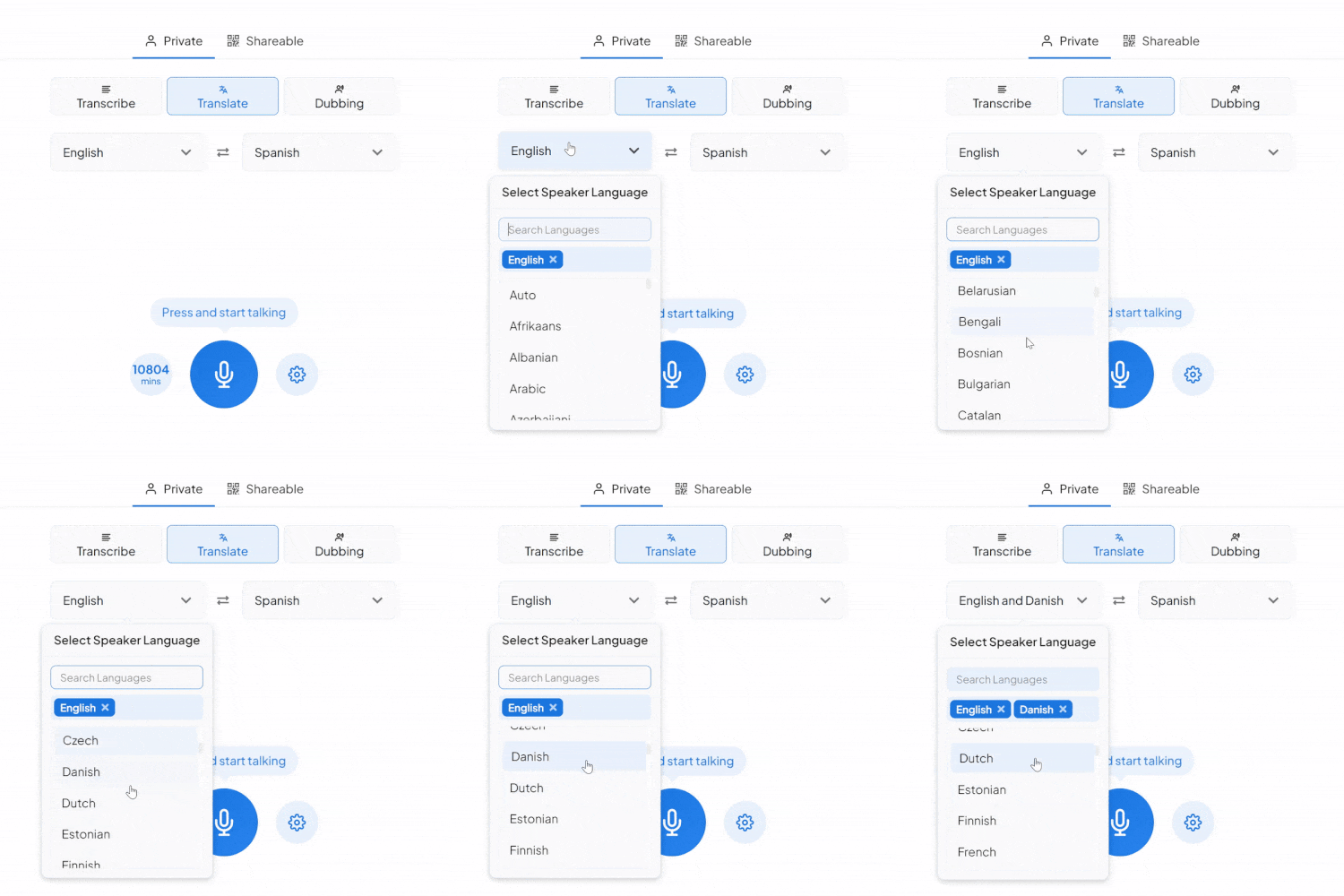
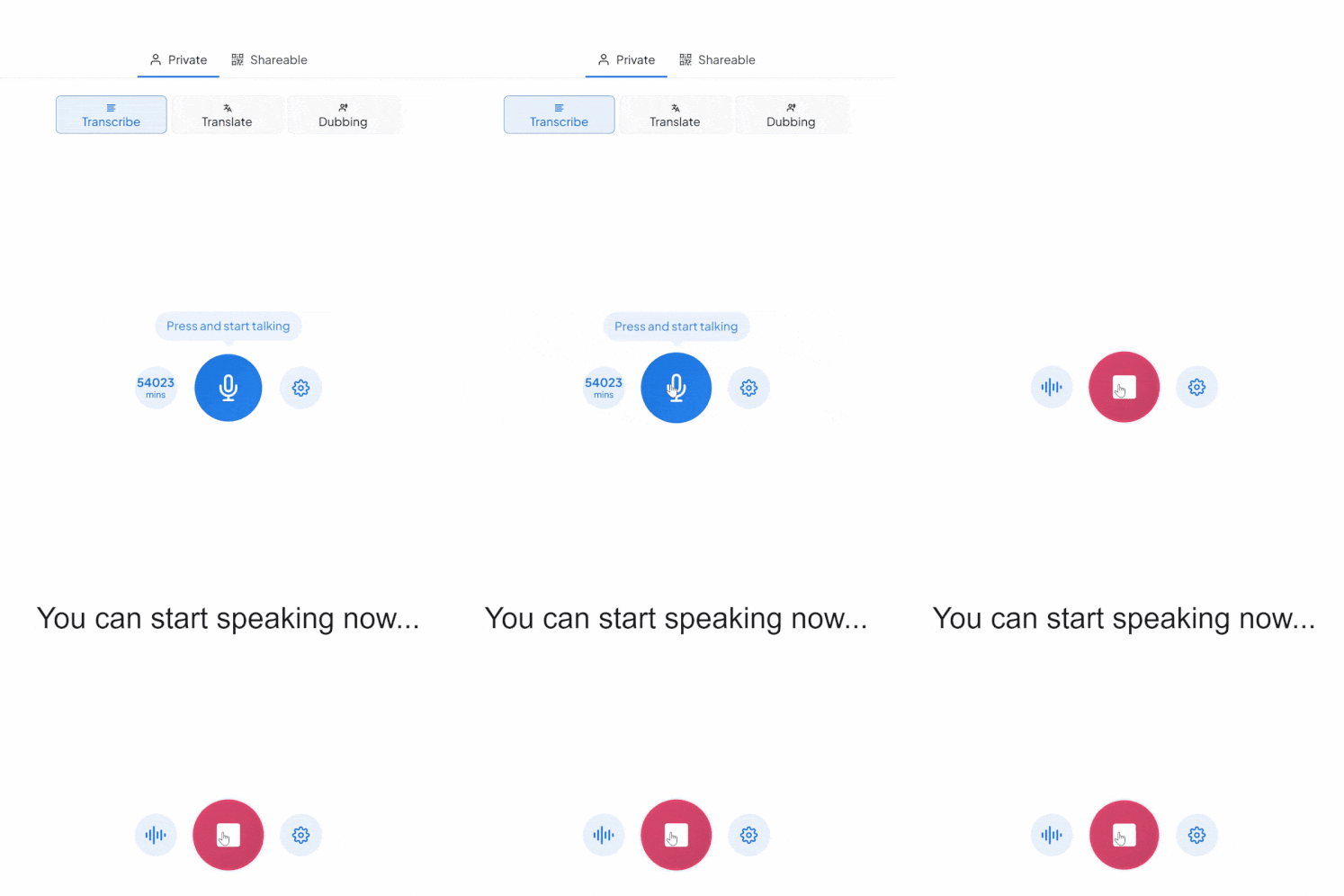
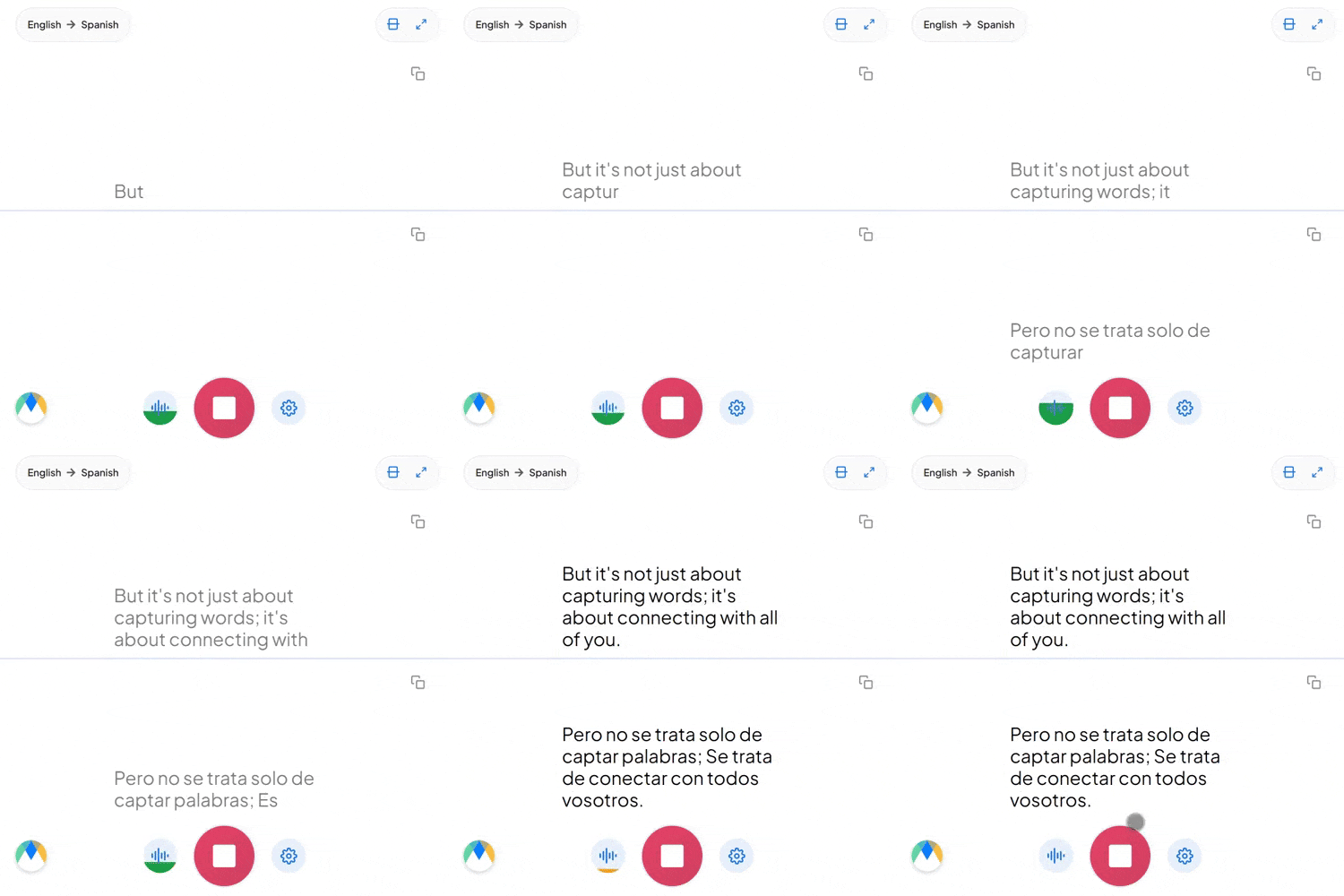
Four settings that separate a rough session from a clean one.
Set names and technical terms in advance, including the right classifier for terms that need one, so they read back correctly every time.
One link is enough for anyone to join your live session and hear the Cantonese translation from their own browser, no account needed.
If more than English alone might come up on the way to Cantonese, auto-detect recognizes each language as it's spoken instead of locking you to one source.
Each line in the transcript points back to its moment in your session, so a line you doubt takes seconds to check, not a full replay.
Sourcing calls and partnership meetings delivered in English, heard live in Cantonese by the people actually deciding whether to work with you.

Intake and consultations delivered in English for Cantonese-speaking patients and clients, where getting the details right matters more than speed.

Press calls and licensing discussions between English-speaking teams and Hong Kong media, production, or talent partners.

School notices and community briefings delivered in English for Cantonese-speaking families who are more comfortable hearing it that way.
The same tool, tuned for where English to Cantonese translation actually gets used.

Earnings calls and investor briefings delivered in English that Cantonese-speaking stakeholders need to hear live, not after a transcript.
Learn More
Clinic intake and consultations delivered in English for Cantonese-speaking patients, where getting the details right matters more than speed.
Learn More
Studio press junkets and licensing calls delivered in English for Hong Kong film, TV, or talent partners, translated live as terms get discussed.
Learn More
English and Cantonese speakers on the same call, each hearing the conversation in their own language as it happens.
Learn MoreWhere Mandarin gets by on four tones, Cantonese uses six in everyday use, some sources count as many as nine historically. More tones means more ways for a mistranslation to slip in on a single mispronounced syllable.
Hong Kong Cantonese speakers frequently write in Standard Written Chinese, grammatically closer to Mandarin, rather than transcribing colloquial Cantonese as it's actually spoken. A transcript that captures spoken Cantonese faithfully is doing something writing conventions usually skip.
"我要同client follow up吓" drops English words straight into a Cantonese sentence, and that's ordinary speech in Hong Kong business culture, famous for exactly this kind of mixing. Expect embedded English terms to stay recognizable rather than get translated a second time.
Connect the meeting or streaming tool you run Cantonese sessions in, subscription required for live use.
Link your Zoom account to enable real-time English to Cantonese captions in meetings.
Bring live English to Cantonese captions into Microsoft Teams meetings.
Send a bot into your Google Meet calls for real-time English to Cantonese captions and translation.
Set up real-time English to Cantonese closed captioning in OBS Studio.
Send live English to Cantonese captions to vMix for broadcast productions.
Nothing gets auto-flagged. Each word carries a timestamp and highlights as the audio plays past it, so you can follow along with the Cantonese recording and the translation side by side to verify anything specific.
Yes. The voices are trained specifically on Cantonese's six-tone system rather than adapted from a Mandarin four-tone model.
Yes. Your English to Cantonese session opens in an editor afterward with the audio aligned to every line, ready to correct and export.
Yes, speaker detection tags each speaker separately in the Cantonese output, so when more than one person is talking English, the session doesn't blur into a single unattributed line.
Yes. English to Cantonese translation is free to start, with no card or account required.
Yes. Cantonese has its own dedicated voices and recognition rather than being folded into a generic Chinese setting, since the two are different spoken languages.
Ordinary bilingual English-English speech doesn't need anything special. For a conversation that could switch between more than English before it reaches Cantonese, auto-detect recognizes each language as it comes up rather than requiring a manual reset.
Group sharing for English to Cantonese sessions needs a paid plan. The free plan covers live translation for your own session, not a shared link for others to join.
Yes, switch to the Dubbing tab. Pick from Maestra's built-in Cantonese voices, or use voice cloning so the dubbed track still sounds like the original English speaker.

Checked against standard spoken and business English translated into Cantonese, including real conversational audio with Hong Kong business terms.
Clear, single-speaker English translated cleanly into Cantonese across our testing, holding accurate tone for common business vocabulary.
Fast, idiom-heavy English and overlapping speakers are the most common source of errors. Budget extra review time if your source audio has crosstalk or heavy slang. Upgrading to a paid plan swaps in the Pro engine, which is tuned to handle exactly this kind of English audio with far fewer mistakes.