
Conferences and trade events
Multi-track agendas where every session needs conference interpretation and the schedule cannot slip.
Give every attendee a live simultaneous interpreter in their own language. Maestra Live delivers real-time simultaneous translation with spoken AI voice output in 100+ languages — no booths, no receivers, no scheduling.
A 30-minute walkthrough for events and enterprise. The free tool needs no form and no sales call.
Simultaneous interpretation is the practice of converting a speaker's words into another language in real time, while they are still speaking. The interpreter listens and speaks at the same time, staying a few seconds behind. Listeners hear the translated audio through headsets or an app, and the original talk never pauses.
That deliberate lag is called décalage, or ear-voice span, and it usually runs two to six seconds. It gives the interpreter enough of the sentence to understand where it is going before committing to a rendering, while keeping the audience close enough to the speaker to stay in step with the room.
The cognitive load is severe. Each language pair traditionally needs two simultaneous interpreters sharing a booth, swapping every 20 to 30 minutes. A single simultaneous interpreter cannot sustain a full day alone without accuracy falling away.
A traditional simultaneous interpretation system means one booth per language, plus the simultaneous interpretation equipment to drive it: an interpreter console, a transmitter and a receiver for every listener. Where no interpreter covers a pair directly, relay interpreting routes it through a pivot language at the cost of a little extra delay.
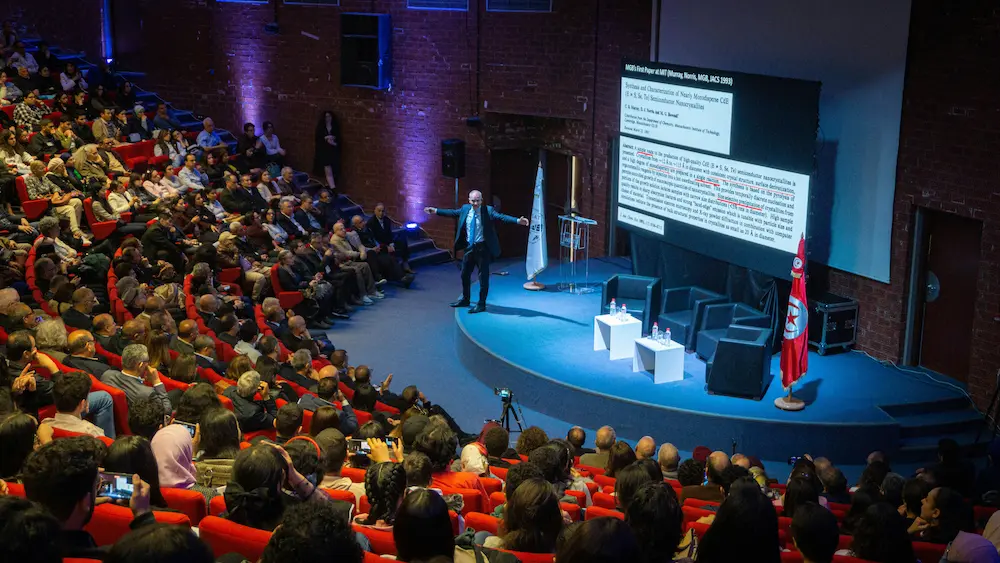
The two modes solve different problems. Simultaneous protects the agenda; consecutive protects nuance in small rooms.
| Simultaneous interpretation | Consecutive interpretation | |
|---|---|---|
| When it happens | While the speaker is still talking | After the speaker pauses |
| Effect on run time | None — the agenda holds | Roughly doubles the session length |
| Equipment | Booth, console and receivers, or a software platform | Usually none, sometimes a notepad |
| Interpreters per language | Two, rotating every 20–30 minutes | One is often enough |
| Typical setting | Conferences, webinars, parliaments, AGMs | Depositions, medical appointments, small negotiations |
| Audience experience | Continuous, everyone stays in sync | Stop-start, the room waits between turns |
The decision comes down to two things: how much time you have, and how many people are listening.
Any event with a fixed agenda and more than a handful of listeners needs simultaneous. Doubling a two-day conference into four days is not an option, and consecutive interpreting forces exactly that. Conferences, webinars, shareholder meetings, town halls, worship services and multilingual training all default to simultaneous for this reason.
In a deposition, a medical consultation or a two-person negotiation, the pause is useful. It gives the consecutive interpreter room to ask for clarification and gives both parties time to think. Small rooms, high stakes and a short speaker list favor consecutive interpreting.
RSI moved the booth into software. Interpreters work from anywhere, attendees listen on the devices already in their pockets, and organizers stop renting receivers and shipping flight cases. It made simultaneous interpretation viable for events whose budgets never justified a booth.
The remaining constraint was people. Booking two qualified interpreters per language, weeks ahead, prices out most webinars and rules out anything decided at short notice. An AI simultaneous translator runs the same job on demand, in far more language pairs, and costs the same whether eight people attend or eight hundred.

Start a live session in your browser and listen to the AI simultaneous translation, or walk through a multi-language setup with our team.
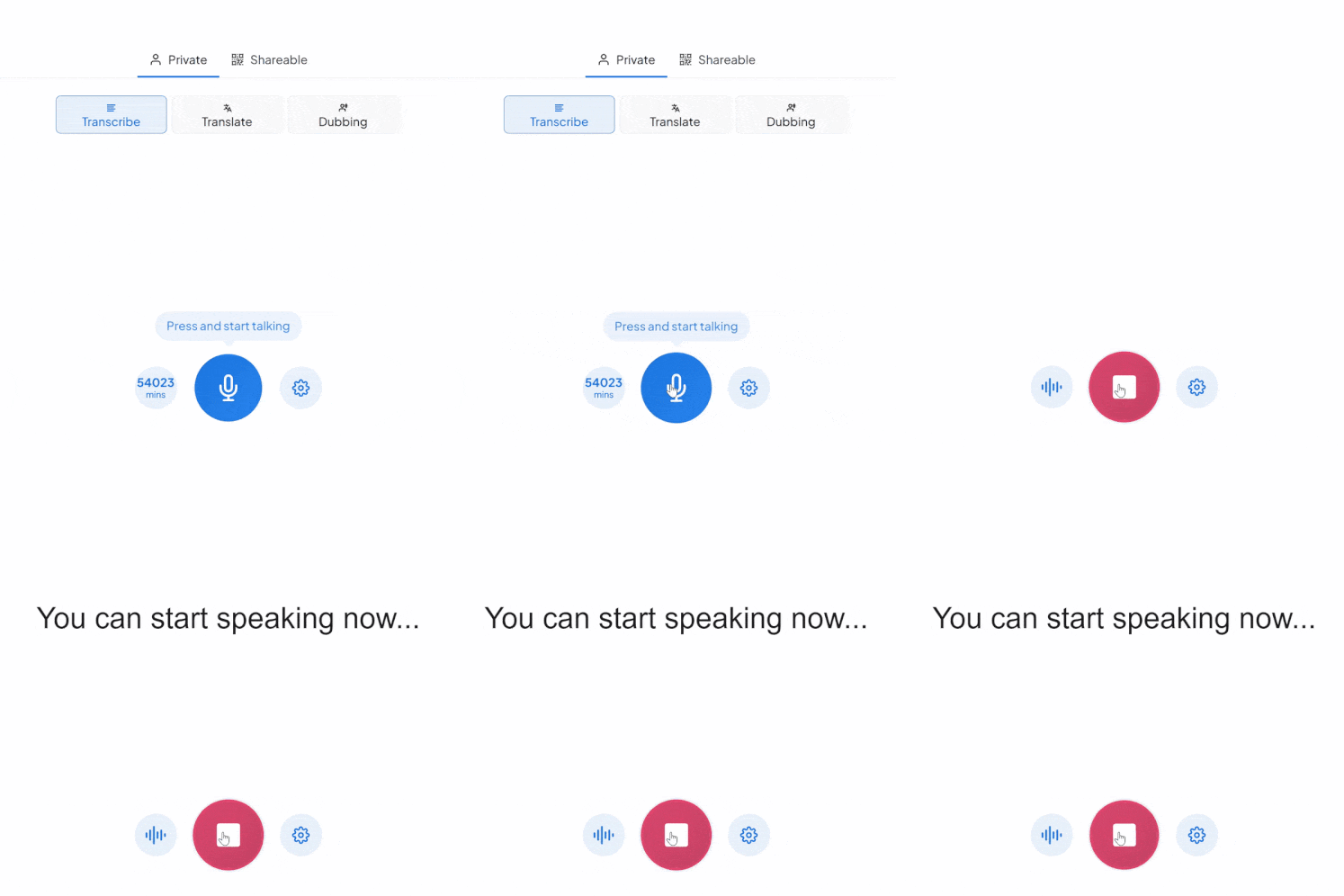
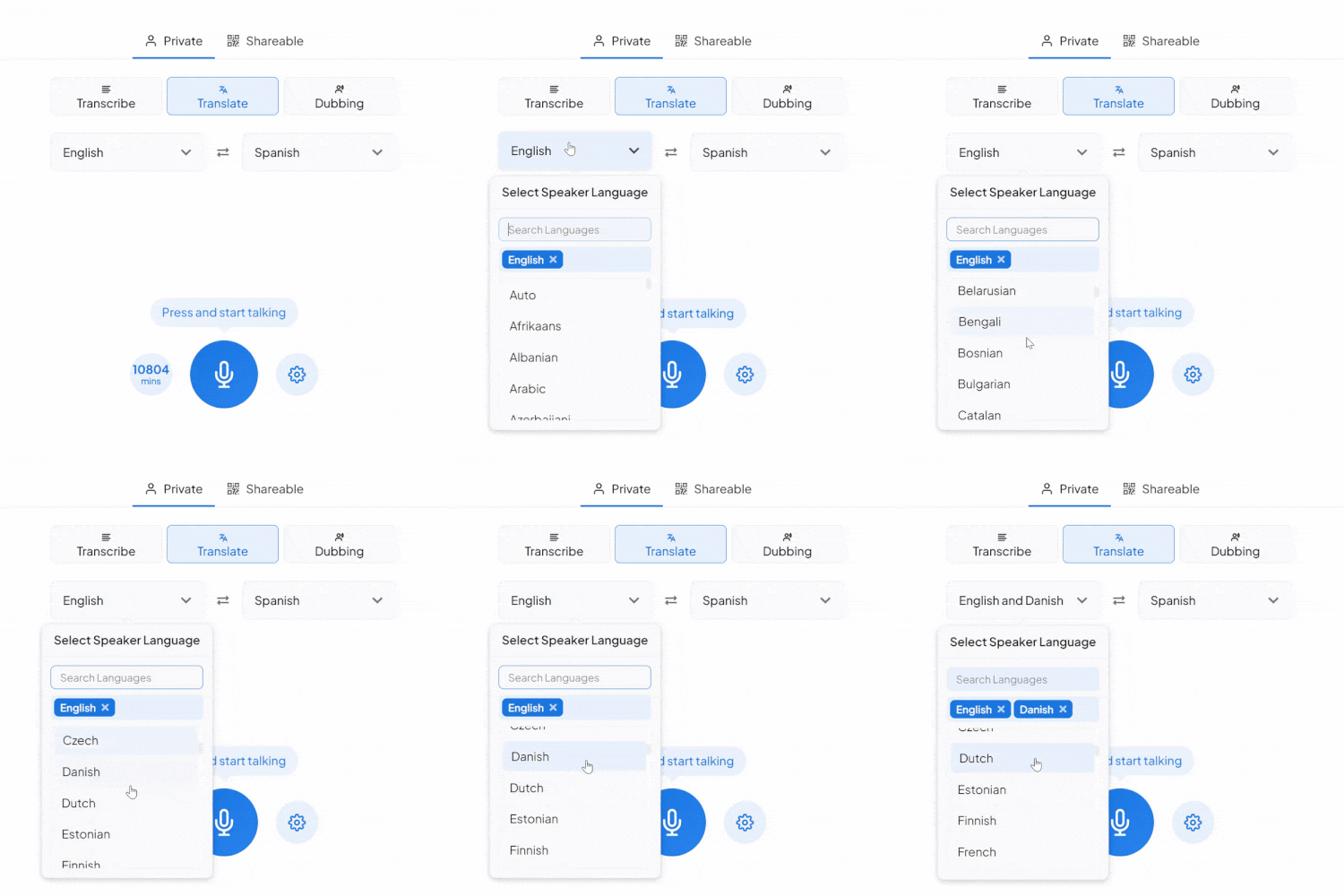
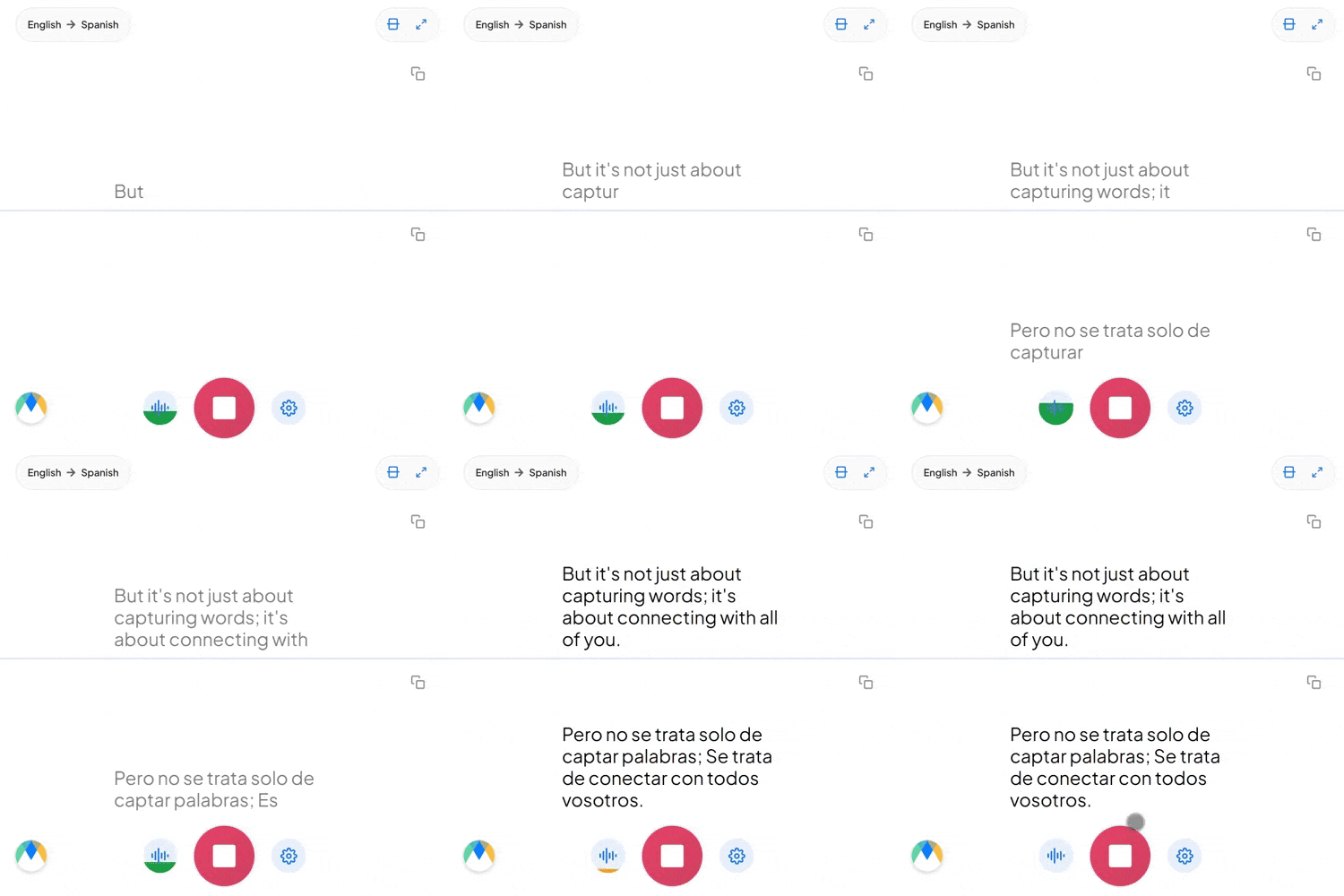
Most organizers are choosing between doing nothing, a simultaneous interpretation service staffed by humans, an AI interpreter, or a mix of the two. Here is how they differ on the dimensions that decide the budget.
| Do nothing | Human interpreter team | AI interpretation | Hybrid | |
|---|---|---|---|---|
| Typical cost | Nothing up front — you pay in attendance, engagement and repeated questions | Two interpreters per language, per day, plus equipment and travel | A software subscription, flat regardless of audience size | AI on the long tail of languages, humans on the critical ones |
| Lead time | None | Weeks, and longer for rare pairs | Minutes | Weeks for the booked languages, minutes for the rest |
| Languages at once | One — everyone works in the host language | Limited by budget and available interpreters | 100+ | As many as you can fund, plus the rest on AI |
| Hardware | None | Booths, consoles, receivers, headsets | None — attendees use their own phones | Booth for the staffed languages only |
| Handles specialist terminology | Only for fluent attendees | Yes, with a well-briefed interpreter | Yes, with a custom dictionary | Yes |
| Best fit | Single-language rooms, or an audience that is genuinely fluent | Diplomatic, legal and regulated proceedings | Conferences, webinars, worship, training, town halls | Large multilingual events with a few high-stakes languages |
Interpreter day rates and equipment costs vary widely by market, language pair and event length. Treat the human column as indicative and get a quote for your own event.
There are three ways to buy this, and the right one depends far more on how many languages you need than on the size of your budget.
An agency sources the interpreters, supplies the booths and receivers, and staffs the event. You get accountability and one point of contact, which is why regulated and diplomatic work still goes this route. You also get the highest price per language and the longest lead time, and simultaneous interpreting services are usually quoted per day rather than per hour.
Booking a simultaneous interpreter yourself removes the agency margin, but you take on the coordination: two interpreters per language, briefing them on your material, and renting equipment separately. It works for one language and becomes unmanageable past two or three.
Software replaces both the booth and the booking. An AI interpreter covers every language on the invite list at once, is available the same day, and costs the same whether the session has eight attendees or eight hundred. For conference interpretation across many languages it is usually the only option that fits the budget.
.jpg)
Maestra Live delivers real-time interpretation in 100+ languages with AI voice output, so attendees hear a spoken translation rather than reading captions.
Because there is no hardware to ship and no interpreter roster to coordinate, the same setup works for a 40-person webinar and a 2,000-person conference. Sessions added late to an agenda get the same language coverage as the ones booked months ago.

Tell us the languages, the format and the headcount. We will walk you through a live multi-language setup and what it costs.
Most remote simultaneous interpreting platforms cover the basics. These are the features that decide whether an event runs smoothly or generates support tickets.
Captions make people read instead of watch. Voice output lets an attendee listen to the talk the way everyone else in the room does.
See live AI dubbingCoverage collapses fast on rare pairs. Check the actual list against your registrations before you commit.
Product names, acronyms and speaker names are exactly what generic engines get wrong. A glossary you control fixes it in advance.
Zoom, Teams, Meet, OBS and vMix support means interpretation joins your existing production instead of replacing it.
A link or QR code that opens on any phone beats distributing, sanitizing and collecting receivers.
The session should leave behind a searchable record in every language it was delivered in.
See live transcriptionBuilt for live, multilingual rooms
Trusted by teams and individuals at:


Simultaneous interpretation is the real-time conversion of a speaker's words into another language while they are still speaking. The interpreter stays a few seconds behind and listeners hear the translation through headsets or an app, so the original session never pauses.
In everyday use the terms are interchangeable. Strictly, interpretation refers to spoken language and translation refers to written text, so the correct term for live speech is interpretation. Most people searching for simultaneous translation are looking for exactly the same thing.
Two per language pair is the professional standard. Simultaneous interpreting is cognitively demanding enough that interpreters rotate every 20 to 30 minutes, so a single interpreter cannot sustain a full day alone.
Yes. Maestra Live connects to Zoom, Microsoft Teams and Google Meet, as well as OBS and vMix for broadcast productions, so interpretation runs alongside the meeting or stream you already have.
Décalage, sometimes called ear-voice span, is the deliberate lag between the speaker and the interpreter — usually two to six seconds. It gives the interpreter enough of the sentence to understand its structure before committing to a rendering.
Use a staffed service when proceedings are legally or diplomatically sensitive, or when a single language pair must be perfect. Use simultaneous interpretation software when you need many languages at once, when the event was scheduled at short notice, or when per-day interpreter rates do not fit the budget. Large events often run both.
A human team is priced per interpreter, per day, with two interpreters per language plus equipment and travel, so cost scales with the number of languages and the length of the event. AI interpretation is priced as software and does not scale with audience size. Rates vary by market and language pair, so get a quote for your specific event.
Yes. Maestra acts as the controller for your personal data as described in the privacy policy, and a Maestra Standard Data Processing Agreement is available on request for customers whose use involves transfers subject to the GDPR or UK GDPR. For any further security review, ask on the demo call and we will put you in front of the right documentation.
No. Because coverage is software rather than a booked interpreter roster, you are not locked into a language list weeks ahead. Attendees pick their own language when they join, which matters when registrations arrive from somewhere you did not plan for.
Simultaneous happens while the speaker talks, so the session runs at normal length. Consecutive happens after the speaker pauses, which roughly doubles the time needed. Simultaneous suits conferences and webinars; consecutive suits depositions, medical appointments and small negotiations.
Traditional simultaneous interpretation equipment is a soundproof booth, an interpreter console, a transmitter and a receiver with headphones for every listener. Remote simultaneous interpretation replaces the whole kit with software, and attendees listen on their own phones or laptops.
Accuracy depends heavily on audio quality, the language pair, and whether specialist terms have been loaded into a custom dictionary in advance. Clean microphone input and a prepared glossary make the largest difference. For diplomatic, legal or regulated proceedings, a qualified human interpreter remains the right choice.
RSI delivers simultaneous interpretation over the internet instead of from an on-site booth. Interpreters or AI work remotely and attendees listen on their own devices, which removes hardware rental, shipping and on-site technical staff.
Relay is used when no interpreter works directly between two languages. One interpreter renders the source into a common pivot language, and others work from that output. It expands coverage at the cost of a little extra delay.
Conference interpretation is simultaneous interpretation delivered at conferences and large meetings, usually with one booth or channel per language and two interpreters per booth. The term is used mostly by agencies and professional bodies; the technique is the same.
Allow several weeks for a human team, and longer for rare language pairs, because availability is the binding constraint. AI interpretation can be set up the same day, which is why many organizers use it for sessions added late to an agenda.
It is often how organizations meet them. Public meetings, healthcare settings and schools in many jurisdictions carry statutory duties to provide meaningful language access. Simultaneous interpretation covers the live session, and the recording, transcript and summary left behind give you a record that it was provided.
Yes. The session link opens in any browser, so you can put translated captions on a monitor or a projector in the room as well as on attendees’ own devices. Most events run both.
Book a walkthrough for your event, or start a free session right now and hear the simultaneous translation for yourself.